Colorado Tech People
How AI Is Rebuilding Trust for Domestic Violence Survivors
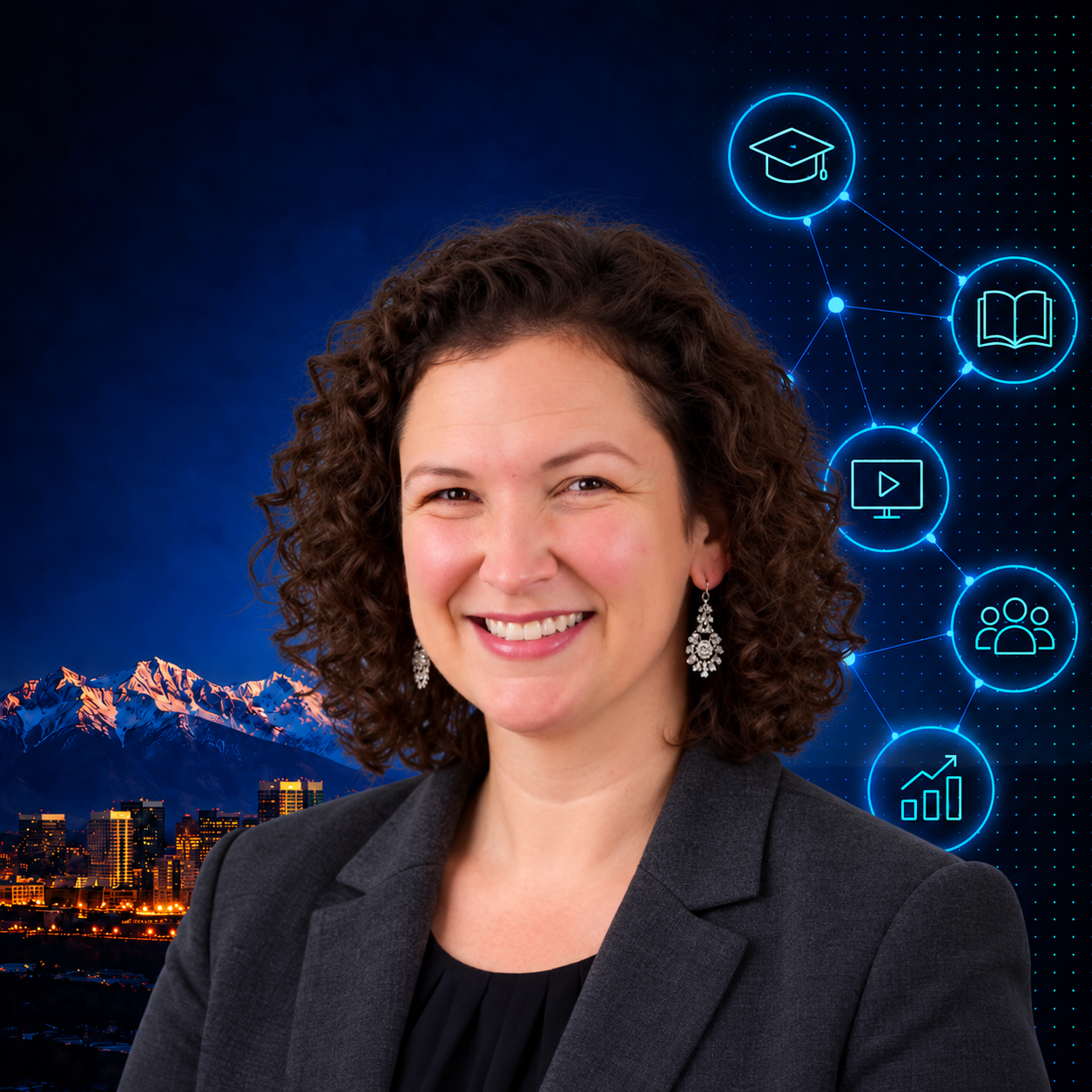
Ten million people in the United States will experience domestic violence this year — more than double the global rate of breast cancer diagnoses. Yet the support system for survivors remains fragmented, underfunded, and often inaccessible to the people who need it most. In this episode of Colorado Tech People, host Monisha Saldanha talks with Anne Wintermute, CEO and co-founder of Aimee Says, about building a trauma-informed AI platform now used by 60,000 to 70,000 survivors to navigate abuse, document their experiences, and access the resources traditional systems couldn't offer them. Anne shares the story behind Aimee Says — from being turned away by risk-averse domestic violence advocacy organizations in the company's early days, to building trust directly with survivors instead. She explains why AI's low barrier to entry (anonymous, judgment-free, zero commitment) makes it uniquely suited to reach people who wouldn't otherwise pick up the phone, and why getting the AI's responses even slightly wrong can break trust for a population that has spent years on high alert for exactly that kind of inconsistency. The conversation also covers Aimee Says' freemium business model, the challenge of pitching a for-profit solution in a historically nonprofit-dominated space, and what it's like building a social-impact AI company from Colorado rather than a traditional tech hub. TOPICS COVERED Trauma-informed AI design, domestic violence technology, AI trust and safety, freemium SaaS models, social impact entrepreneurship, building AI for underserved populations, Colorado startups.
Listen now



Transcript
Monisha Saldanha (00:00) Today's episode explores how AI can enable hyper personalization for underserved populations, unlocking access, equity, and better outcomes at scale. I'm joined by Anne Wintermute, CEO of Aimee Says, a company using AI to deliver more tailored, accessible support to the people who need it most. We'll dive into the hard decisions behind building this kind of technology, how AI makes it possible, and the real impact it can have on individuals and communities. Anne thank you so much for joining us today. Anne Wintermute (00:33) Thank you so much for having me. Monisha Saldanha (00:35) What inspired you to build Aimee Says? And what is the problem that you saw and what is the solution? Anne Wintermute (00:41) Yeah, so Aimee Says serves people who are experiencing relationship abuse and a synonym for that that makes people a little more uncomfortable is domestic violence. The resources that are currently available in those spaces are really fragmented and are fragmented for a lot of reasons. Some of them are because the funding resources are really complex. Some is because it's a lot of survivors who went through their own thing who are able to offer really small unscalable support and when I was experiencing that with my clients, that there was just not one place, one single source of truth, one place that someone could navigate through their survivorship with. That's why we decided to build this product. Monisha Saldanha (01:21) How many people have you reached with the product so far? Anne Wintermute (01:24) Gosh, we've been around for about two and a half years. 60 to 70,000 people have relied on our AI to help end those relationships or help deal with the aftermath. There's often some kind of complex litigation that goes on after the fact, especially if there are shared children to the relationship. Monisha Saldanha (01:43) Wow, that's amazing that you've touched so many lives in such a short period of time. Hyper-personalization sounds powerful, but also complex. What were the hardest early product decisions in making that real? Anne Wintermute (01:55) One of the first things to decide when you're personalizing is personalizing what? Personalizing could be, you know, being able to change the background color on the website, right? Or being able to change some things that aren't necessarily serving the reason that the person came to the site. So when we think about personalization, it is how do we use AI to personalize the things that are necessary in this very specific space? And when we think about the impact of relationship abuse on someone's life, their mental and emotional health, their cognitive functioning, their legal needs, their employment needs, it really comes down to what they have experienced, very specifically, paired with what are their goals? What does justice look like to them? What does freedom, what does health look like to them? So that they can access those independently in their own worlds, their own lived realities. So those are the areas where we are really personal saying is how do we take those messy lived experiences, turn them into information that people can access and see so that they can tell their story. Monisha Saldanha (02:58) Wow. What is the back and forth that happens in your product? What are the interactions that the people using your product have with the product? Anne Wintermute (03:07) Yes, so this is a design thing because when we look at the ways that we can interface with different AI products, they're often, you know, with a single tool, a whole bunch of areas where I could interface. It can get a little confusing. It can get crowded. For people who are impacted by relationship abuse, they're often animated by a sense of fear. There's an undercurrent of trauma. So in so much as we can simplify it and then automate all of the additional actions that are taken on the backend, we're serving that survivor. So what that looks like for us is the one thing that people are able to do consistently is show up and talk. So when people are utilizing our website, they are primarily engaging in a back and forth with a trauma informed AI. And where the magic happens is in what we're automating in these parallel processes in the background. And that's that data extraction, that's taking that messy lived experience, turning it into individual discrete data points, populating them to timelines, tagging them with relevant information. So in this particular use case, automating directly out of the chat is one of the best things that we can do to serve that population and make it easy for them to interact with the site. And this is going to be true across areas where people may be experiencing that trauma or come from a place of trauma and are engaging with an AI service. Monisha Saldanha (04:28) Was there a moment when you had to pivot your approach based on what users actually needed versus what you initially assumed? Anne Wintermute (04:36) Yes, I'm going to say we pivoted based on who we thought would adopt us first. And then when it comes to the decisions we make about what folks need, sometimes we have to trade off, what can they easily find somewhere else already? We don't want to duplicate something that's already available like a divorce ecosystem. So that's certainly, you know, we will pivot away from something that might be asked for because we have finite resources and we want to make sure we're building the things they can't find somewhere else. But early on, we really thought that the domestic violence advocacy space would warmly invite additional capacity. So when we first kicked this out the door and started having those conversations and meeting with those folks, we found out really quickly that the kind of risk intolerance in that space was high enough that we had to kind of silo that for a minute, if you will, and work directly with survivors to build exactly what they needed. Monisha Saldanha (05:29) When you say they were worried about the risk, is that they were worried about using AI in this situation or what was the risk that they saw with the product? Anne Wintermute (05:37) Yes, great question because this is a risk-averse population or field, I should say, to begin with because they are primarily funded around metrics that reduce domestic violence fatality, reduce lethality, get people out of relationships and prevent the worst possible outcomes. And in that space, you can imagine it's pretty risk-averse. We're doing everything we can to kind of lock down the privacy, lockdown exposure for that individual person to get them to usher them out. Well, that's really the tip of the iceberg of fix who needs support in this particular context. So it's the most risk averse pocket. And you're right, when AI came out, there were a lot of concerns around privacy, around confidentiality, around legal and non-legal discovery. And the narrative throughout the community, which was guided primarily by the National Organization Against Domestic Violence was, we don't know it's safe, don't use it yet. Monisha Saldanha (06:34) Right. How did you then reach the audience if you weren't partnering with these organizations? How did people find out about Aimee Says? Anne Wintermute (06:42) So this is something that is unique about a very undermet need. When you have needs that are unmet in the world of technology and social media, you have kind of the mom and pops, if you will, that pop up and create these small communities of their own. They create them because they didn't have them for themselves. And so you have these really robust, well-organized social media communities where people who aren't finding their needs met in traditional systems, whether that's mental health or legal or domestic violence advocacy, or their employer doesn't understand what they're going through, et cetera, they find themselves in these, I'll call semi-private online communities. So we've actually partnered in those spaces and helped support folks directly through those spaces in order to find them. Monisha Saldanha (07:28) How do you prioritize features when the needs of your users are diverse, nuanced, and often not well represented in traditional data? Anne Wintermute (07:37) I would go back to the not just building what they might need that is also available somewhere else, but really focusing on what is currently not available so that we can fill the gap that this need has generated and make sure that we're building the things that have the most kind of individual per unit value and not necessarily compete with other products. And one simple example that I'll give is everyone who goes through a divorce is required to turn over their sworn financials. This is how much I made, this is what I paid in taxes, these are my current expenses. Those tools are ubiquitous. I can find them online, I could go to CHAT GPT and have it put one together for me. What is not available is how do I prove abuse? How do I protect my children in the family court system? How do I protect myself? Everyone who goes through divorce has to do that financial stuff, but it's available. Everyone who goes through divorce might not have to deal with the abuse-related things, but our population absolutely does, and it's not available. So we don't do the financial stuff. They can find us somewhere else. We do the things that aren't otherwise already being met. Monisha Saldanha (08:45) And at a practical level, how does Aimee Says use AI to deliver hyper-personalized experiences? Anne Wintermute (08:51) That's a great question. So like I said, when you're working in these underserved or trauma animated populations, the comfort level in the chat space relative to other features is important to consider. So for us, there's the obvious AI integration of this large language model that we have trained and fine tuned and she has our libraries that she accesses. She's also utilizing the context of that, you know, provided by that particular user. Many of our users have robust data-filled accounts. All of that is a part of that library. But I really think that the other places where the AI is happening is more interesting. And I'll give a few examples. We're automating the calendaring, time-lining, date selection, tagging aspects to populate these folks' data files. But we're also, we don't read the content that people provide to Aimee. This is really important in terms of no third party disclosure and in terms of the confidentiality of the accounts. So we have AI in there. Is there any indication in this that there could be a risk of suicidality? Is there any indication in here that there's a risk that this person could experience imminent harm? And then how do we respond to that risk? Do we have concerns perhaps about human trafficking in this? Can we force resources on that? So push them, I should say, not force them. So we have all of these parallel AI-driven processes that are going on, which again, are going to continue to hyper-personalize that, but help capture kind of the edges of mistakes that we don't want to make. One of the internal systems that's running is, did Aimee just give legal advice? If Aimee just gave legal advice, then we need to follow that back up. We also need to be logging those pieces of information. Really cool kind of subutilizations of AI that aren't necessarily experienced by the end user, but that add tremendous value to their use of the product. Monisha Saldanha (10:41) What makes AI especially suited to serving underserved or hard to reach populations? Anne Wintermute (10:47) That is such an important question. Most of our systems and services are meant to be interacted with by people who kind of have a baseline of perception of safety in the spaces that they navigate, a baseline of a sense of confidence that the systems will respond appropriately. They are more likely to live in close or co-location with the types of services that they need. And that leaves out a huge population of people whose trust levels may be low, people whose resources levels may be low, people whose physical access is at an extended distance. And it turns out there's a whole lot of people in that space. And when you add on top the lived experience of, I'm in a relationship with someone who's scary to me and I don't know what resources are safe to reach out to, we have narrowed kind of the resource list even further to folks who are also experiencing that. When you think about how accessible AI is, how kind of zero depth of entry it is, I could, with no repercussions, just submit one chat, submit. And I'm not on the hook for anything. Nobody's judging me. Nobody's forcing me to take an action that I'm not comfortable taking yet. We can really significantly reduce the barriers to access in that space. And that is not just true with domestic violence survivors. That's true with people whose immigration status is a concern for them right now. That's true for people who historically had not been served by the systems, who experienced higher rates of incarceration. We can really easily map out a lot of people who, for one reason or another, are not going to pick up the phone to make a call to a local organization or agency or national hotline because they do not feel assured that that call will not result in a worse harm. Monisha Saldanha (12:36) Right, and you mentioned trust. How do you build trust in Aimee Says, in a population of people who may be low on trust? What are the ways, particularly in the beginning, when you weren't established, how did you build trust? Anne Wintermute (12:51) I really like this question and in part because it touches on something that is really important to me right now as I'm learning, as I engage with more and more of our users. So there's trust around things like, is my information actually confidential? Is my ex gonna be able to access this? What does it look like on a credit card statement? There's kind of your baseline, easy to respond to aspects of trust in that trust is built when people engage with the AI and they see that attunement. Aimee understands. Yes, that was a traumatic experience. Yes, he was calling me names. This thing was happening. So there's trust that's built in that sense of attunement. And the reason I, at the beginning of this question said that it touches on something that's really important to how I'm looking at our work now is that our population is especially sensitive to that lack of attunement because they have been involved in relationships sometimes for decades, where it's that just a little bit of a misstep, just a misattunement that is the perception or what the person experiences when it turns out two people actually have different goals in that interaction or in that relationship. And so they've constantly been on edge around this misattunement. That means that when you utilize an AI, and there is that misattunement, a fact was wrong or something was a little bit distorted, which is, you know, unfortunately a thing that happens because AI will sometimes want to fill in those blanks. Now you have a trust issue just at your general consumer, you know, level. And you have people who came to your site because they so desperately need to feel understood. They so desperately need to have their lived realities affirmed. And you've incidentally or accidentally created this perception of misattunement. It's supposed to be their safe private space and when we messed that up or Aimee Says something that's not just quite right, we really do risk putting that trust into the past. Monisha Saldanha (14:52) Yeah, so it's quite a, it's like a tightrope you need to walk. Really interesting. And what role does natural language or conversational AI play in making your platform more accessible? And did you have to play around with the conversational tone of your AI to make it fit? Anne Wintermute (15:09) Yes. So as I mentioned, most of our users are going to interact almost exclusively in that chat space unless they need to go see their data, export it, send it to an attorney, or remember that they're not crazy because their look is all of the abuse cataloged. And getting it right is actually pretty subjective. One person might want chatty back and forth communication and having a question asked if the individual is actually really upsetting, they feel like they don't have agency over that conversation. Some people want information packed. The relief that they feel by feeling understood by the person that they're communicating with, in this case, not a person, an AI, is so tremendously valuable that they want to set their answers to be really long. So they might get three paragraphs of... reinforcing or validating and contextualizing information in response to just a few sentences that they shared. So what we actually did wasn't try to do what technology has done pre-AI and try to give everybody kind of the mean response and actually created a subset of personalities that reflect the needs of users that might change over time. Because sometimes they're ready for one thing and not, you know, at another time, or just the personalities and preferences of each of those individual folks. So yes, it takes a great deal of tuning and generating multiple personalities in order to meet a kind of diverse set of communication needs. Monisha Saldanha (16:36) And since you are working in these sensitive and very high-stake contexts, is AI meeting the needs of what your users are looking for, or do you feel like AI is still falling short upon occasion? Anne Wintermute (16:50) So if we look at pre-generative AI, pre-tool like Aimee, we have rocket shipped people's ability to access the hyper-personalized information that they need. We have birthed a new stratosphere of resource. And I think the vast majority of people who would intersect with this very specialized AI would say that. And AI has limitations. It can't give you a hug. Our AI is not drafting, know, per se, people's legal motions, right? So they may come and they may generate all this information and this background and these datasets with Aimee and then need to utilize a tool that is highly specialized in legal drafting, in which case we didn't meet their needs in order to finalize something like that. It will never be enough. And I'm still confident saying that we generated a new stratosphere of support. Monisha Saldanha (17:41) Fantastic. How do you ensure your AI systems are fair, unbiased, and truly representative of the communities that you're serving? Anne Wintermute (17:49) You try. You use the information that you know about bias that we cannot fix independently because we do rely on LLM partners and you build space around it. So in our particular case, our model is told explicitly and directly to pay attention to and to incorporate not just people's lived experiences, but other kinds of intersectionalities, background, race, financial, immigration status, gender orientation, sexual orientation, et cetera, to build as robust as possible a context window within those lived experiences and different identities. And if someone doesn't provide that information, there's always kind of the revert back to the norm, right? So we encourage our users to say, if there are aspects of your identity that are important to you, that make you unique, that color your picture, please do share those because she was trained to incorporate them. But in the absence of them, there's not much that we can do. With that said, for our paid account users, we have a really robust section for people to introduce all of that information. And we tie it directly to every message that is submitted back and forth as though the user typed it at that time. Monisha Saldanha (18:59) Wow, fantastic. Shifting gears a bit, how has building Aimee Says in Colorado influenced your journey as a founder? Anne Wintermute (19:09) Colorado has such a great pocket of founders that don't have the same legacy, technology approach that you might see on some of the coasts. Like this is how we do it and it always looks like this and it's a part of the, you know, the big boy community, et cetera. It is a very Coloradoized version of, you know, what it looks like to found and what ecosystems are created. And, you know, I was a part of the. the Boulders, the TVX, their tech accelerator. And what a wonderful state-based program and resource to accelerate these products in Colorado. So yeah, Colorado has a way chiller shorts and flip flops approach to creating solutions. Monisha Saldanha (19:55) What advantages or challenges come with building an AI company focused on social impact outside traditional tech hubs? So outside of being in Seattle or San Francisco, are there advantages but also challenges? Anne Wintermute (20:10) Focus in on one aspect of the question you asked and what is it like to build in a space, in a social impact space, and specifically one that until us had not been viewed in a proprietary model capacity. The first year of this, I spent all of my time convincing people that we shouldn't be a nonprofit, that we should look different from existing kind of conventional or traditional models of service delivery in this space. And to argue the point that it was in fact the lack of capital and innovation and being left behind in the digital health revolution that had allowed this problem to continue to persist unabated when we were solving or addressing all sorts of other even highly stigmatized issues through technology. And I will leapfrog forward from acknowledging that the amount of effort helping people re-conceptualize what service delivery might look like in this space and I'll fast forward all the way to just a couple of weeks ago I was at a Women's Venture pitch competition which was wonderful. I'm giving the pitch wonderful warm reception applause. I joked that I was going to need more time for the pitch because you know the resonance with the audience was slowing things down because I had to hold my pitch for applause which is wonderful. And then the pitch ended and it was time for the investor judges to ask questions. And none of them knew what to ask. Investors don't. Often the first question that we get is why isn't this a nonprofit? This should be free. It is really difficult to not just create a product, serve the needs of, you 10 million people in the United States this year alone will be victimized by domestic violence. And to give you a little idea of scale, 4 million people globally will be diagnosed with breast cancer. Okay. 10 million people in the U.S. will be victimized by domestic violence. Two and a half times greater than the rate of people globally who will be diagnosed with breast cancer. The scale of this problem is astronomical. It is absolutely a blue ocean. But when people are faced with the discomfort of this gender-based aspect, even when we have a clearly commercializable product we're already doing, they don't know what to say. They're not sure where it fits. They don't know what questions to ask. And we saw that literally live on stage at the Women's Venture Challenge. Monisha Saldanha (22:35) Wow, that's so interesting. And that was even like a gender Amazing. What have you learned about storytelling when your company sits at the intersection of AI and social impact? Anne Wintermute (22:46) So both AI and domestic violence create a great deal of energy for people. And my storytelling always has to be modified by what emotions do either of those topics raise for the person that I'm talking to? How do I make space for those? How do I help gently, because no one likes to be shoved, right? No one likes to be pushed into their own discomfort. How do we tell the story in a way that makes space for those things and still tasks them, whoever I'm telling the story to, to step up in whatever way makes sense? So if I'm storytelling to a domestic violence advocate, it's around, AI creates an existential threat to their field, to their community, to the work that they've committed themselves to. If I'm storytelling to a survivor, it's really going to revolve around that they're not crazy. And if I'm storytelling to an investor, it's encouraging them to lean into that discomfort and to see the opportunity that they have to leverage their point, to do good and do well at the same time. It's really audience dependent and very much based on what comes up for that person. Because if I've got a rigid person in front of me who's uncomfortable, I could tell them about 10 monkeys dancing and spinning plates on their head and they won't hear any of it because there's so much resistance that they feel inside. Monisha Saldanha (24:07) Can you share a story that illustrates how Aimee Says has made a meaningful difference in someone's life? Anne Wintermute (24:13) And there was a time when I was meeting with a gentleman in a same sex relationship in the UK who was clearly very impacted by the course of control that he was experiencing in this relationship. And he had done the very thing that everyone tells you to do. You need to go to the police. And the police told him, we can't make an arrest unless you prove it. How do we know that these things are going on? Which to anybody who's listening to this and has had like really traumatic experiences and validated by the people that they need to help them, can imagine how defeating it would be to be in that situation. And so this gentleman had enough courage to hop on in office hours with me and we got him set up with Aimee and said, okay, Aimee, look up the course of control laws in the UK. and then ask a series of questions in order to compile the necessary information and make it exportable. And it was incredibly challenging for this person. They were so impacted by all that they had gone through. And I got to hear back after office hours that his abusive partner had been arrested based off the report. Monisha Saldanha (25:17) Wow amazing. And that was even done retroactively. So it's a really powerful tool to kind of take what's happened and make sure that the documentation is what it needs to be. Anne Wintermute (25:29) Yes, and all of these relationships are retroactive up until the moment of right now. They're based off of long-standing patterns that develop over time and that persist in order to create an experience of entrapment and this, you know, unequal power dynamic. The capturing the patterns and the history is fundamental. It is foundational to understanding that story. And that's absolutely what our data modeling is trained to do. Monisha Saldanha (25:55) And now that Aimee Says has been around for a couple of years, like you mentioned earlier that some of the established organizations that are serving this population were a bit risk adverse to Aimee Says, have you seen any difference now that you have, you know, tens of thousands of users? Has that changed the perception of Aimee Says? Anne Wintermute (26:16) That and the, if we go back to the storytelling, know, the good networking, the lack of pressure to adopt things before they're ready, they're absolutely paying off. I'll be speaking on multiple, you know, global and national panels just this summer about the opportunities that AI creates in that space. And we absolutely see pockets of, it's kind of a latent technology adoption compared to the general population. But we're absolutely seeing it. Folks who are willing to put their toe in to try Aimee, to share Aimee with their clients. the wins are so much sweeter when it took time and patience than the easy ones. And it's really wonderful to see that community started integrate this resource into their spaces. Monisha Saldanha (27:06) Yeah, I mean, it's amazing to hear about your journey and how Aimee Says is able to use AI to serve these underserved populations. It's incredible. What is one book every builder should read and why? Anne Wintermute (27:21) I was going to recommend the Jenny Fielding's book, Venture Everywhere. So many of the books about building are specifically how to build bigger, how to build faster, how to build, you know, smarter, not harder. And we miss the multitude that is each founder. And what Jenny is able to do is really merge that founder's journey with so many other aspects of being human, of being a part of the community, of travel, of self-care. And I think it's a refreshing approach to building builders. Monisha Saldanha (28:00) Yeah, great, great recommendation. I'm going to have to add that one to my list. So thank you. What a wonderful conversation. And thank you so much for joining me today. Anne Wintermute (28:10) Thank you so much for having me. Monisha Saldanha (28:11) And I'd like to thank our listeners for listening to this episode of Colorado Tech People. If this conversation on AI and hyper-personalization spark new ideas, consider sharing it with someone passionate about technology and equity. Don't forget to subscribe so you can hear more conversations with the founders building impactful companies across Colorado and beyond. Until next time, keep exploring how technology can expand access and create meaningful change.
More Episodes
Keep listening
Building Tech for the Moments Between Therapy Sessions
Mathias Gran shares how his family’s experience navigating his daughter’s mental health crisis led him to create SuperProud, an app that helps parents reinforce positive behaviors and support children through challenging growth moments. The conversation explores children’s mental health, positive reinforcement, product-market fit, and the realities of building a mission-driven startup while balancing a career and family.
Building Technology to Fix How We Find the Right Healthcare
Tenay Benes, founder of The Care We Need, explains how her own complex-illness journey led her to build a platform that helps people navigate fragmented healthcare, wellness, and human services and connect with the right care professionals more efficiently. The conversation explores patient-centered care navigation, AI as a support tool rather than a replacement for human judgment, and Tenay’s ambitious long-term vision for making complex care more coordinated and accessible.
From 'Can We Build it' to 'Should We'?
Arterial founder Kyle Wandishin shares what he has learned building a startup at a young age, from overcoming concerns about credibility to using customer insight, mentors, and community to shape the product. The conversation also explores how AI is increasing the leverage of small teams and why the most important founder question is increasingly shifting from “Can we build it?” to “Should we build it?”