Colorado Tech People
AI for Good: Who Benefits, Who Decides, and What Gets Measured?
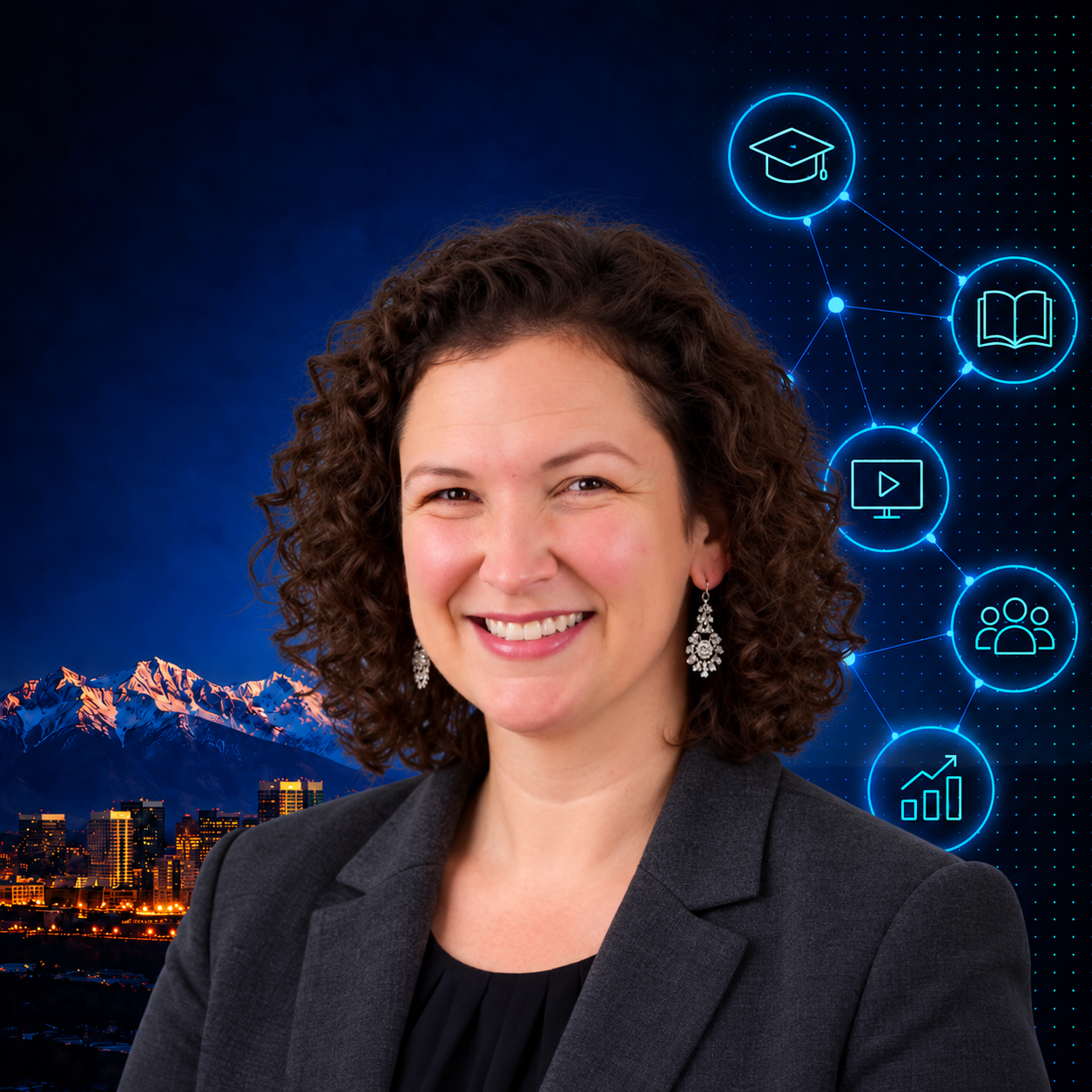
Jacob Bielecki, founder of Bene AI, joins Colorado Tech People to explore what “AI for good” actually means and how mission-driven organizations can adopt AI responsibly. He shares a practical framework for evaluating whether AI truly creates positive impact by asking who benefits, how outcomes are measured, who was involved in the design, and what tradeoffs were made. The conversation covers real-world examples in healthcare, wildfire detection and education, as well as concerns around fraud, bias, equitable access, regulation and overreliance on AI. Jacob argues that the most important principle is judicious use: applying AI intentionally while preserving human judgment, accountability and awareness of the limitations embedded in historical data.
Listen now



Transcript
Monisha Saldanha (00:01) Welcome to Colorado Tech People, where we highlight the innovators using technology to solve real world problems. I am your host, Monisha Saldanha an executive with 15 years of experience in product management. Today's episode explores the promise of artificial intelligence as a force for good and its potential to improve lives and communities. I'm joined by Colorado-based Jacob Bielecki.
founder of Bene AI, a company focused on helping mission-driven organizations navigate and apply AI to drive meaningful social, economic, and environmental impact. We'll discuss how AI can be approached and designed responsibly, the challenges of and opportunities for measuring impact, and what it takes to build and harness technology that truly serves people. Let's dive in. Jacob, thank you so much for joining me today.
Jacob (01:00) Thank you for having me.
Monisha Saldanha (01:02) So
first question for you, what was the problem that Bene AI was created to solve and what is the solution?
Jacob (01:11) Yeah, well...
a little bit about me. I studied social psychology as an undergrad and sociology as a graduate student. And I've spent my career in working with mission-driven organizations, nonprofit and government agencies. And I spent the last six years working as a management consultant nationally and as AI was being used in research and strategy consulting, many of the organizations that we were helping
were really struggling to adopt AI or understand how it could benefit their own mission-driven work.
So that was really the impetus for me to go out and create my own consulting shop that specifically focuses on what I call First Mile AI navigation and adoption. It's really helping mission-driven organizations, leaders, teams, boards, understand where and how AI can and maybe cannot or should not be used in their mission-driven work.
Monisha Saldanha (02:21) Fantastic. And thinking about being mission-driven, when you hear the phrase AI for good, what does it mean to you in practical, measurable terms?
Jacob (02:34) Yeah, so it's very amorphous term that I think a lot of folks use in very different ways. The way that I approach it is sort of through a litmus test in a way. I use kind of a framework. There're sort of key questions to ask maybe, or how to define what AI for good means. So it's a little stretchy. But
the first question, I think, is who are the primary beneficiaries? So who is the good for?
And I think ultimately people might think, you know, in a for-profit nonprofit space, but we might get into this a little later. I think there's definitely blurred lines, right, in terms of motivations. But I think One fundamental question around AI for Good is who are the primary beneficiaries? What is the sort of solution trying to achieve for whom? Another question is what are the benefits of the let's say, intervention, the skill,
tool, what are the benefits and how are they being measured. Another one is who was involved in the design planning and implementation of the tool or the skill set or the solution. And the fourth would be costs.
What did it cost? And not just monetary costs, but what did you maybe have to relinquish or sacrifice in order to adopt a certain skill or a certain tool application, et cetera? So I define AI for good in terms of how you would answer those kind of four fundamental questions.
Monisha Saldanha (04:22) And Do you find that many companies fail against these measures?
Jacob (04:30) It's challenging because let's take your basic LLM, your large language model, for example.
People can use that tool for in a variety of ways, right? You can use it to learn how to be fraudulent or you can learn how to better help your community. You can use it to research ways to maybe help your neighbor identify resources because they're disabled and they live alone. Or you could use it to brainstorm ways to hijack a car on the other side of town. So I think it really depends
A on how you're using the tool, first off. So that's why it's amorphous, I think. Then you have different kinds of maybe businesses or enterprises that are inside of the AI environment directly, AI native maybe companies.
And you have maybe this hybridization too of public benefit companies, of B corporations, non-profit governments. So I think it really does depend on how it's being used, not necessarily who's using it. And
You know, I think Going back to that sort of four question litmus test, you can also maybe use that to kind of get a sense of the degree to which it is being used for good or not. One maybe example would be around objectivity. For example, If somebody is looking for help on something, and again, going back to the large language model example.
If somebody's looking for a neutral objective analysis on something, let's say they're looking for the most reliable car, right? And they're searching for that. If you have a large language model that's basically receiving paid sponsorships, advertising, similar to like how Google works, right? Where Toyota might
sort of pay the most and so they're the sponsored link, right? They're going to be at the top of the page. I think what we wouldn't want to see is somebody who thinks that they're communicating to a neutral AI, a neutral large language model, and getting a response where it's actually not objective. It's, you know, they're basically being fed whoever paid the most to be at the top of the list.
So that was a long answer. So it kind of does depend, I think, but I use that litmus test as maybe a good way to kind of get a sense of how good something is.
Monisha Saldanha (07:18) Are there examples of large language modules that are using sponsorship in their answers?
Jacob (07:27) I don't know. know that, you know, Open AI has been exploring, I think some, you know, alternative revenue solutions. I don't think that they're doing that. and so I don't, I don't know. However, it, it might be that because these are all obviously based on large training data sets, right?
that The data that the large language models are drawing from are drawn on
you know, a history of maybe paid promotional presence and material, right? They might be based on the quality of the search engine optimization or generative AI engine optimization that companies are now, you know, deploying to show up in results. So I'm also not, you know, a...
data scientist or engineer, so I'm not quite sure the degree to that, but I don't think right now there's a lot of maybe skepticism. Let's say going back to like the the lay user perspective, right, or the responsible AI perspective. think you if you're using a large language model you always want it to show their show its work, right, and it also can also
depend on the quality of your prompt, right? So if you're just asking what's the most reliable car, it might tell you, you'd want to see citations or you might say, you know, what's the most reliable car according to, you know, JD Power and Associates or Consumer Reports or, know, so maybe it depends
again.
Monisha Saldanha (09:11) Cool.
Yeah. Can you share a few examples of how AI is being used today to solve meaningful problems in areas like healthcare, climate, education, or accessibility?
Jacob (09:27) Yeah, sure. There may be a few ways to demonstrate how AI is being used. I have a few examples from
right here in Colorado that some folks might not be familiar with. So one is Denver Health, which is really, I think, the largest safety net hospital in the state. And Denver Health partnered with a company called Nabla to pilot
ambient AI. So I don't know if you've seen the latest season of The Pit. There's a few episodes where a new doc is advocating for an AI system to basically help folks help the doctor's chart. So they're sort of listening and interpreting, transcribing.
So Denver Health piloted this, I think it was last year, and then it was successful and they launched it more broadly across the system. So it did demonstrate some pretty effective results. Basically, it was able to help doctors transcribe their notes. So it freed up more
time for the docs to see more people. So in terms of outcomes, all right, so going back to maybe our litmus test in terms of who is the beneficiary, right, you have multiple beneficiaries. In this example, obviously the docs are having to do less admin, pajama time, I think is what they call it, where they have to basically wrap up their notes their day before they go to bed. So it may be destressed
you know, the workload on the doctors, it allowed them to see more patients and, you know, be more present according to some of the qualitative results. Patient satisfaction scores, which is a pretty hard metric that's used across healthcare for payment and scores increased. And so there were these sort of measurable results that came out of the pilot that eventually led to the broader adoption of that technology in healthcare.
Another example, maybe on the climate side or environmental or public safety side is again at the state in Colorado, Pano AI has been partnering with a few different agencies. And I think with the forestry service or the federal forestry service around wildfire detection. There are over a hundred cameras, sort of 360 degree cameras set up across fire prone areas of the state. And they're actively monitoring for smoke. And I think there was
One example that's used in 2024, think in Douglas County, where it was able to detect an early stage fire from a lightning strike and officials were able to put it out very quickly. That's maybe another example where you have multiple beneficiaries of that kind of intervention. Both of those products are put
are brought to the market by for-profit companies, right? So there's a profit-driven incentive behind that, right? But it's also kind of doing good at the same time.
And I think that those two examples and many others, I think, demonstrate maybe where and how profit can be more of a fuel than as a primary motivation. So that, again, maybe gets to the core of how I would distinguish between AI for good and other kinds, is how the solution and intervention is set up.
On the education side, just give you one more example. There's Colorado Springs School District 11 piloted this technology called PowerBuddy that was basically helping teachers
lesson plan and sort of track student progress over time. And it also sort of demonstrated similar to the healthcare example, it sort of created more bandwidth for the teachers. As you know, or as you can imagine, teachers also are sort of expected to be highly.
present with their students in the same way doctors and nurses are supposed to be highly present with their patients. But they're surrounded by lot of admin, a lot of administrative obligations and planning and strategizing. So it's another very similar example of how a professional can leverage the technology. Yeah.
Monisha Saldanha (14:28) Can
you give us some examples of AI for bad that are real
Jacob (14:32) Hahaha
Monisha Saldanha (14:33) examples of how you've seen AI being used in a way that you don't think is appropriate?
Jacob (14:39) Sure. So I actually do a bit of work in the aging space. So working with aging services and advocacy organizations.
Fraud is a, is, one kind of obvious example where, people are using deep fakes voices, images. So it's basically like a more advanced form of scams, where somebody might, be able to take somebody's voice. Let's say a young woman and use it and manipulate it to, to contact the woman's mother and ask for money.
And there's a lot of recordings of things like these out there on the internet of potential scammers where somebody has basically an AI generated face over their actual face. And they're trying to convince somebody to buy their services or give them money.
So that's maybe one example where we're all, you know, kind of potential victims. And I think that's also where a lot of fear and anxiety is coming out of among maybe the anti-AI advocates or the slow down advocates.
Monisha Saldanha (16:04) And
Can you think of any barriers that prevent impactful AI solutions from reaching the communities that could benefit most?
Jacob (16:13) Yeah, I think, again, maybe picking up from what I just said around anxiety, fear, right, of AI for bad. I think there's been an interesting evolution of public dialogue and discourse on the left and right around AI and its sort of dangers and promises. So I think
I think that There are, you know, I think There's a healthy tension and a healthy discourse that's emerging right now that is sort of finding its way into the middle. think a lot of
honestly, State regulation is helping to kind of promote that. We've seen that right here in Colorado too with the Colorado AI Act and what's happened and happening with that piece of legislation. In that, it has evolved and it's kind of, I think, needed to evolve. So I think a major barrier is just psychology, right? And if we think about
Again, My work is mostly with nonprofit organizations and government organizations. So mission-driven work. A lot of folks in that field are very human-oriented and human-centric. And so there's also not a, there's not a huge swell of people that want to just adopt the technology, change how they do things and rely on it for delivering upon their mission. They're taking a much more restrained approach
to the tech and the skills for a variety of reasons. Okay, fear, anxiety, they're too busy, et cetera. So those are some of the barriers, I suppose. What I do professionally is I try to help those leaders and organizations understand the technology first
and how the technology can fit into their organization in terms of their mission, in terms of their values, their culture, maybe their legacy, and their skill sets too. And judiciously navigate where and how they can adopt it and deploy it. It's, I think, We're at a point where
mostly everybody agrees that it's here to stay and that it does need to be, even if you choose not to
use it in your work, you need to intentionally and explicitly choose not to use it and maybe have some rationale for why. And so some of the organizations that I'm working with right here in Colorado, it's one or two champions that are able to kind of bring it into the organization or it kind of grows from that adoption and orientation inside of an organization. It is highly human and
sort of behavioral and soft. It's not like learning how to write an email or how we're used to like working in IT. It's very much a change management process that I'm finding in my work. It's people, it's really people oriented and people driven.
Monisha Saldanha (19:42) You
mentioned the Colorado AI Act. What's your opinion about the act? Is it going to help AI for good or is it going to hinder AI development?
Jacob (19:54) Yeah, so I'm also not a lawyer, and I haven't studied it necessarily. I've been sort of monitoring it from the sidelines. I think it was a couple of comments or observations. One, I think it was obviously well-intentioned. It was written very early, early in terms of maybe the evolution of AI, right? And
Colorado, I believe was the first state to put something like that together and to have it on the books. And that's why it's gotten a lot of national attention also from, you know, from the Trump administration. I think, let's see.
I generally I think that it's needed. I think this kind of framework is needed. I think there does need to be some some form of regulation and protection in part because not a lot of people really know or understand how AI works. There have been there's a lot of history of automated decisions, especially in
in government and in healthcare where somebody was maybe denied a service or denied a coverage erroneously by a machine, by a computer, maybe because of a racial profile, an economic profile, or even a data error that resulted in
a catastrophe, a health catastrophe, an economic catastrophe. And back to your point around maybe motivations and profit seeking. There are a spectrum of different players out there, some of whom just seeking to earn a buck regardless of what it takes. And so I think that the
people, in general need to have some guarantees of protections. The Colorado AI Act is a very basic, it's sort of for high risk, high stakes decisions that are being made or could be made by an automated system. So think again, healthcare, finance, legal
that need to have some guardrails or some evidence or proof behind it, or even a human decision maker at the final step of the decision making process. So I think that's all the good thing. What we're seeing in Colorado, though, I think is because the technology is so hard to understand, most people
aren't advocates maybe around the Colorado AI Act unless or until they become more savvy in understanding the technology and the risks. What we're finding is the data center. So there's also data center legislation in the mix and people, general sort of the population of Colorado are gravitating more to the data center case and argument because it's much easier to understand, right? And there's been quite a bit of
know, dialogue around data centers too.
And so you can imagine a data center down the block from your house that is supposedly taking a lot of water and taking a lot of energy and your energy bills goes up. That's the narrative. And so there's been a lot more advocacy around the data center argument. And there are two data center bills right now. I know that if this is being published, this may all have been resolved or elements of it have been resolved.
At this moment, there are two bills that are basically kind of doing this, and so there's kind of a gridlock at the state level.
Monisha Saldanha (23:45) And Thinking through equitable access to AI, what are your thoughts around the costs associated with AI? So you can get the free versions of ChatGPT or Claude or whomever, but really you want to probably pay $20 a month to get the professional version. And then if you want to do some coding with Claude, then you're maybe up to $200 a month.
And
that means that it's at a price point that not everyone can afford. What are your thoughts around the equity of access to AI?
Jacob (24:23) Yeah, that's a really good question. And it also points back to this historical, this sort of a historical story of technology or surveillance as convenience where, you know, those that can't afford the technology or don't have the power to refuse something basically have to
relinquish certain rights or certain privacy. So in this example, in your example, or in the case of large language models where a free version is basically you have no kind of protections, meaning everything that you put into it as a non-paying user is being used to train the model and the company basically can own that data. And sort of the higher up you go in terms of paying, you get sort of more protected tiers of data security.
protection and guarantees. So I do think there's a major equity issue there. But I think it's similar to many of the other equity issues across technology, where data is sort of being harvested. Or you have to relinquish some amount of data in order to get something, a service or a benefit.
it's, It's significant as a small business owner. I am even affected by this because.
With Claude, for example, I have three people on my team, and their enterprise level of subscription starts with five seats. So if you're a small business owner and you want their enterprise package, have to start, you have to buy five seats, even if you don't have five people on your organization. I know there's people advocating to Anthropic to change that, but they're kind of also targeting much larger enterprises for their solutions.
On the equity side, I'll also just say this, sort bringing it back to home in some of my work. One thing that we try to promote with our clients is equity in the workplace. So another way to think about that, this idea is that not just giving tools or trainings or workshops
to the savvy techies, right? Or the wizards or the people who are most curious about AI, but to really try to bring it into the whole entire workplace from your frontline staff to your admin staff, to your fiscal team, to your executive suite, to your board of directors. And giving everyone the opportunity to understand the tech and figure out where and how it can apply to their own work. This is evidence that's coming out still from
you know, the fortune 500s and the major consulting firms is, you know, what's working and what's not working in terms of AI adoption across an organization. And oftentimes it's, you know, it's,
allowing people to the time and the space to understand the tool and how it can apply to their own individual work, their team's work, the organization's work. And so I see that as an equity question too, know, even somebody who's out in the field 24 seven, you know, let's say a caseworker, a social worker. There are a lot of opportunities for somebody like that, even if they're not tech savvy or they're scribbling notes on paper to get an
the opportunity or the chance to understand the technology and ways in which it can be used and deployed in their individual work. So yeah, equity, I think, is all over the place, that's for sure.
Monisha Saldanha (28:08) And
How is Colorado uniquely positioned to contribute to AI solutions that benefit society?
Jacob (28:14) Yeah,
so, well, again, The Colorado AI Act, in my opinion, is a, evidence of how Colorado was maybe thinking in a forward way. Maybe it was very early still, and the fact that it's going through some revision again is probably a good thing. but
You know, that's one maybe clear sign that Colorado is thinking about it at different levels. You know, Colorado has a lot of public benefit corporations. It might be the high, one of the highest concentrated markets in the country, if not the world, a lot of B corporations. And we also, I think, have this culture of like work-life balance, of being present with each other. It's maybe a hustle culture, but there's still a lot of
of non-work life elements, right? We love to go to the mountains, know, half the office doesn't show up on a good powder day, things like that. And so I think that we're actually, Colorado's really well poised to adopt responsible AI in the
public sector and the private sector because we have, think, generally, I'm generalizing here, but a healthy mix of sort of ethics and work ethic and maybe moral ethics. right? And I'm optimistic that Colorado can be a leader or continued leader and not be swayed too much by the tech industry or the utilities just to chase economic
you know, benefit. Of course, that's going to be important for Colorado, especially now because of the deficit. But I think it's figuring out the balance between being innovative, being, you know, financially and economically strong, and also adopting, you know, practices and promoting companies that do promote responsible AI.
Monisha Saldanha (30:32) What partnerships between startups, universities, nonprofits, and government are most promising in this space?
Jacob (30:40) I know of a few, mean, generally I would, I will say that I think that's where maybe a lot of, of growth and innovation is, and is, is happening and will continue to happen into the future.
There are the Smart Cities Alliance is maybe one example where there's some really great partnerships between the public sector and the private sector, innovators in government that are working with.
with tech companies and entrepreneurs to pilot and scale innovative solutions around maybe it's EVs or it's monitoring systems, working with public data, non-sensitive data, improving government efficiency, things like that. So the Smart Cities Alliance, in my opinion, is a great
example of that work happening. I think the CU Boulder is involved in a ton of partnerships and initiatives around technology, AI, working with the private sector and also working with government. The federal government is also launching a national effort to create these hubs.
these AI kind of capacity building hubs through the National Science Foundation. And so this concept is also public private partnerships and multi stakeholder. And I believe it involves workforce development. So I think that's still in its early stages, but I think we'll it'll be interesting to see where and how Colorado brings its hub together. It's not a lot of money coming from the feds. I think it's a million dollars a state. It's tiny, but I
it's more around sort of bringing people and institutions together and working on strategy for broader AI readiness training and adoption kind of at scale.
through various public institutions and society as a whole. That's my understanding of it. And then I'll just also plug the Rocky Mountain AI interest group, which is a sort of a large group. It's become a large group. They're based in Boulder and they are a very inclusive sort of agnostic group that welcomes everyone who has a curiosity in AI. And they have a variety of subgroups on specific areas of focus
including legal ethics, education, women in AI. And I'm affiliated with them and we're just starting a new group called AI for Good, in fact. And so
in that kind of community, you've got just all sorts of people from all different walks of life and disciplines and sectors coming together really to kind of ask questions and poke and prod at AI, different tools and skill sets and so forth. It's been a welcoming community. And so I think that's also something Colorado has going for itself is that there is a lot of inclusivity and a lot of people willing to connect and explore things together.
together.
Monisha Saldanha (34:02) Yeah, I've been to some of the Rocky Mountain AI Interest Group events. They're great, and it's wonderful that it's a non-profit.
Jacob (34:10) That's right. Yeah, they recently became a nonprofit. So they're kind of a formal institution now.
Monisha Saldanha (34:16) Yeah, it's fantastic. What emerging AI applications give you the most hope for improving quality of life over the next decade?
Jacob (34:26) This is maybe a boring answer to that question, but I honestly, think it's, it's your, your, your, off the shelf large language models. So I think it's your Claudes and your Geminis and your Chat GPTs. And I say that because, that's probably that's going to, I think continue to be the, the go-to for most people's use of AI generally in society.
And so right now, it's already kind of your expert in your pocket, right? If you have a question, you ask it, you can get a variety of depths of answers or perspectives on your answers. And those models are just getting better and better and stronger and stronger.
And so in my work too, most of the work that I'm doing with mission-driven organizations, it actually stops at the large language models. It's using large language models in various ways across an organization. And that's typically enough for an organization unless they're looking for a very specialized use, in which case they find another tool off the shelf
be it a grant writing tool or an accounting tool or whatnot, there really isn't a lot of novel original design and development happening in most organizations in general and even more so in mission driven organizations. But as we've seen with Claude, for example, right?
you can do more and more and more with the tool and sort of being able to build more and do more and integrate more and so forth. And so I think those inevitably will also be happening in the personal lives of people to the extent that people are okay with that level of integration and allowing it into sort of their private lives.
And so, you know, I'm optimistic, I guess. I'm more of an optimist than a pessimist for sure about the technology. That it will be offering more
positive outcomes for individuals. It will also be, I think, advancing a lot of research and innovation in the sciences and biosciences. And then, you know, on the mission-driven side of things, I think it also holds a lot of promise for folks that are, you know, really working to make the world a better place socially, economically, environmentally. And all of that will outweigh the bad and the
Maybe the advocacy for responsible AI and protections will also be able to counter the fraudulent activities, the spam, et cetera, that folks might be using the technology for.
Monisha Saldanha (37:30) If
you could guide builders toward one principle to ensure AI serves humanity, what would that principle be?
Jacob (37:44) Yeah, Probably, judicious use. Judicious use, means a few things, right? Maybe at high level it means not letting it go and relying on whatever it gives you. Also, Where and how you are in
in deploying it or employing it in your own work, meaning preserving the human element, the human in the loop, right? The, you know, critical decision making that might require a more nuanced view, acknowledging that
these tools are based on historical data and historical data is not objective, that it's biased, that it carries a lot of issues and problems with it. And so this blind faith approach is very, very, very dangerous in a variety of ways. And we're seeing evidence of that all the time.
So I think that's a big one is a judicious use is being intentional and aware of where and how the technology is used and what it's relying on to give you answers or set you in a particular direction and that applies to everybody right and how everyone and everyone can use it but especially if I think for builders.
There's a lot of danger with newcomers to the technology who don't have a history in coding or engineering, who are building a lot of tools, vibe coding tools and trying to monetize them or commodify them. So I think there's also going to be a lot of risk on that side of things. And then of course, we, you know, the,
The models are also getting stronger and stronger in identifying gaps and deficiencies in security of existing tools and software and platforms. So I think the next few years are gonna be a very wild ride, a lot of mistakes and probably scary things will happen in terms of security incidents and whatnot.
Part of the journey, I guess.
Monisha Saldanha (40:14) Great,
and last question for you. What's one book every builder should read and why?
Jacob (40:22) this was a hard one. and I, I chose, Automating Inequality by, Virginia Eubanks. It was written in 2018, but it actually still holds maybe even more. So it was really about sort of early predictive analytics systems, machine learning systems that, were used primarily in government services to make decisions about, people.
and families in terms of accessing benefits. And these examples that are used in her book are really about how it basically further disenfranchised people and is sort of a warning call that we shouldn't be relying on
historical data sets entirely to understand the present or the future or to make decisions about people and not to automate decisions to that there does need to be an awareness of historical bias and in the data sets and there should also be a human hand in decision making, especially when it comes to people's health, well-being and livelihoods. So she kind of equates some
all of this sort of big data, data decision making automation to the digital poor house where the, you know, the sort of the least affluent and least powerful folks in society are most subject to the greatest sort of privacy.
what's the word, they basically give up, sort of the first to give up their privacy in order to access certain benefits or privileges. So I think it's more relevant now maybe than it even was in 2018. And it's think slowly being understood in sort of the responsible AI movement or the AI for good movement.
Monisha Saldanha (42:42) Cool, thank you for that. Well, Jacob, this has been a wonderful conversation. Thank you so much for joining me today.
Jacob (42:49) Thank you so much for having me.
Monisha Saldanha (42:51) And I'd like to thank our listeners for listening to this episode of Colorado Tech People. If you enjoyed this conversation about AI for good, consider sharing it with someone curious about where technology is headed next. Don't forget to subscribe so you can hear more conversations with the innovators shaping Colorado's tech ecosystem. Until next time, keep exploring the technologies that will define the future.
More Episodes
Keep listening
Building Tech for the Moments Between Therapy Sessions
Mathias Gran shares how his family’s experience navigating his daughter’s mental health crisis led him to create SuperProud, an app that helps parents reinforce positive behaviors and support children through challenging growth moments. The conversation explores children’s mental health, positive reinforcement, product-market fit, and the realities of building a mission-driven startup while balancing a career and family.
Building Technology to Fix How We Find the Right Healthcare
Tenay Benes, founder of The Care We Need, explains how her own complex-illness journey led her to build a platform that helps people navigate fragmented healthcare, wellness, and human services and connect with the right care professionals more efficiently. The conversation explores patient-centered care navigation, AI as a support tool rather than a replacement for human judgment, and Tenay’s ambitious long-term vision for making complex care more coordinated and accessible.
From 'Can We Build it' to 'Should We'?
Arterial founder Kyle Wandishin shares what he has learned building a startup at a young age, from overcoming concerns about credibility to using customer insight, mentors, and community to shape the product. The conversation also explores how AI is increasing the leverage of small teams and why the most important founder question is increasingly shifting from “Can we build it?” to “Should we build it?”