Colorado Tech People
The Accessibility Problem Big Tech Still Hasn't Solved
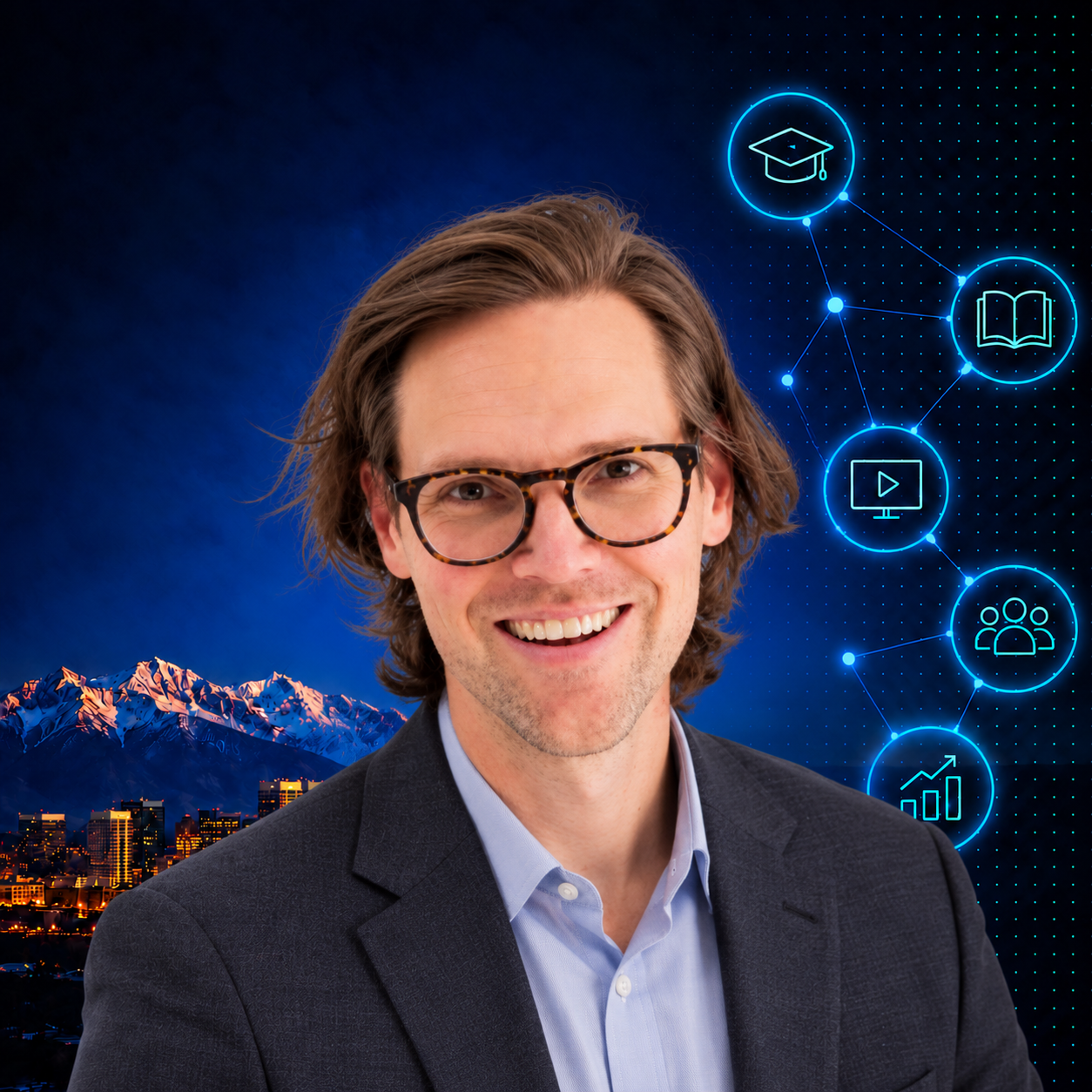
Father-and-son founders Chase and John Prieve of Hi There Solutions share how lived experience with hearing loss inspired them to build communication technology for deaf and hard-of-hearing people. They discuss the everyday accessibility failures that still exist across travel, healthcare, restaurants, education, and emergency services—and why accessibility is too often treated as an afterthought. The conversation explores their shift from a consumer to a business-focused model, the importance of building technology with the deaf and hard-of-hearing community, and their work with FirstNet to support first responders. Ultimately, their mission is about making accessible communication an expected part of human-centered design rather than a special accommodation.
Listen now

Transcript
Monisha Saldanha (00:01) Welcome to Colorado Tech People, where we talk with the founders and builders using technology to solve real problems. Apple, Google, Microsoft, Meta. They've all invested billions of dollars in accessibility. So why do millions of deaf and hard-of-hearing people still struggle with everyday communication? I'm your host, Monisha Soldana, and today I'm joined by Chase Preve and John Prev.
The father son founding team behind Hide Their Solutions, a Colorado company building communication technology for people who are deaf or hard of hearing. Today we'll explore why accessibility remains one of technology's biggest unsolved challenges, what the largest technology companies are still missing, and how lived experience can lead to better products than enormous RD budgets. So let's get started.
John and Chase, thank you so much for joining me today. Awesome. Onisha, hey, thank you so much for having us. Yep, I'm Chase Spree, founder of High There Solutions. And to address your question about these big tech companies who have not addressed the accessibility problem, here's the thing: they don't see how big the market is. They perceive it to be too small. If you think about the total market for deaf, hard-of-hearing individuals.
globally is four hundred and sixty six million people. By the year twenty fifty, according to the World Health Organization, one in four people will be deaf or hard of hearing.
Wow, that's an amazing statistic. And why do you believe these big companies miss the mark? they don't see how they can generate revenue off of it or make money and return some kind of money back to their investors. They don't see it when it's like, hey, it's a big market, go after it.
Cool. and is that what you're doing at High There Solutions? So we are a for profit company. However, what we like to brag about a lot is the fact that we are built for deaf our tech is, I mean, built for deaf heart of hearing by deaf heart of hearing. I'm the only hearing person in my company. My dad, co-founder John Preve, who's on right now. He has severe hearing loss, an early investor of ours, two time deaf Lymphian in the marathon.
And a great advisor, doctor and coach O. J. Logue, and then we had a couple other people on our cap table who are deaf as well. So we we can brag, we're for deaf, we're built for deaf by deaf. That's awesome. And John, welcome to the show. You've lived with hearing loss yourself.
Can you tell us about a moment where technology completely failed you during an everyday conversation? And how did this lead to the company you had to build? You bet. Thanks. And great to great to be with you today, Mo Nishan. Thanks for having us on. Yes, hi everyone, I'm John Preeve. And where technology completely failed an individual like myself with severe hearing loss and a bilateral
Hearing aid user, I have a story to tell. Because this story also changed our company dynamic for Chase and I. Yeah, we pivoted. Yes. So we we have a number of deaf advisors, influencers, consultants. Like Chase mentioned, our tech is built by deaf for deaf, who helped us along the way. And we learned their life stories. Their life
journey living with hearing loss because hearing people, I'm sorry, deaf people do the same thing hearing people do. They eat at restaurants, they go to banks, they go to the doctor, they shop, they travel. Their travel stories with hearing loss was just were were just unbelievable. Terrible. So I said, well you know, let me do some market research. I have a severe hearing loss. I'm a bilateral hearing aid user.
Let me do some market research. I travel every week for my day job and I booked a flight on American Airlines, Denver Airport to Phoenix Airport, round trip. Now, Monisha, pick your airline, pick your airport. They're all the same. Not very good for a deaf or hard of hearing person. But in my profile, I put into American Airlines special assistance. I n I have a severe hearing loss.
And I need special assistance. And I sent it off to American Airlines. Well, I waited and I waited. Finally, two days before the flight, American Airlines special assistance calls me up. I'm a deaf person and they call me and then they're emailing me, Mr. Preeb, you need to call us. And I'm like, Gosh, this is awkward. But fortunately I could still use my smartphone.
With my hearing aid technology, so I called them up and their questi their first question to me was, Mr. Preev, you need to tell us exactly what is your medical condition. And I'm like, Well, it's right there in my profile. I wrote you, I have a severe hearing loss. What can you do for? And they're like, Well, Mr. Preev, we have good news. We can get you a wheelchair.
Like, look, I can walk just fine. I don't need a wheelchair. What else can you do for me? Well, alternately, Mr. Preev, we can have someone walk you down to the gate. Well, they do this for people who are blind or low vision. And I said, Well, look, I wear glasses, but I can see just fine, but I'm gonna take you up on that. But I want the individual to do one more thing. Sit at the gate with me and listen for the overhead announcements. Because even hearing people cannot understand what
What's being said on the overhead announcements? And they Yes, Mr. Brief, just show up, we'll take good care of you. So I show up on a Monday morning at Denver International Airport, checking with American, they take me over to Prospect Air Services, and the lady is looking for my name on a tablet. She doesn't see it. She puts it down. She pulls out a wheelchair. And I said Think think about that for a moment.
A wheelchair? Really? For hearing loss. I said, put that thing away. You're supposed to walk me down to the gate. It's ridiculous. So she walks me down to the gate and then we get to the gate at the C terminal American. and she turns to leave. And I said, What are you doing? You're supposed to sit here with me and listen for those overhead announcements because I can't hear them. That was the that was the arrangement.
No, no, Mr. Prieve I I have to get back up to the Grand Hall. The gate people will take care of you. Well, no one shows up, and then finally, when when they start doing the early boarding for individuals with disabilities, they wave me over and they say, Mr. Prieve you can get on now. Well, I'm wearing my hidden disabilities sunflower lanyard that identifies myself as an individual with a hearing loss, and I stop at the front of the plane. I talk to the two flight attendants. I said, I have one question.
I have a severe hearing loss. I want to know are all your announcements, including the pilot announcements, in a written form so I can follow along? not quite. Here's what we do have. They pull out a pamphlet and they hand it to me, and it was the initial safety announcement in Braille. Unbelievable. I know. So now, all right, to finish the story up.
And how we made a pivot in our business. Now I'm in Phoenix. I'm at the Phoenix International Airport. I go to American Airlines Special Assistants. And now I'm assuming the role of a big D deaf person, okay? Someone who's not audible, signs only, and I'm signing, not speaking. And behind the counter they're freaking out. They're like, my gosh, time out. We need one hour before we can even get an interpreter over here to communicate with you. And I'm like, Well, TikTok, my flight leaves.
So they pull out a scratch piece of paper, Monisha, and we're passing cryptic notes back and forth. One of their questions to me was, Is it okay if you sit in an exit row, Mr. Pareve? Well, if you're a person with a disability, especially if you cannot hear and you cannot speak, you can't sit in an exit row. But I answered the sure, I'll sit in an exit row. Now they caught me later and they moved me to another's chair, but still I'm just like, What is this? But Monisha, at the end of that conversation.
With American Airlines Special Assistance, they once again they brought out a wheelchair for me to take me down to the gate. Unbelievable. What the heck? I flew home, I told Chase a story, and I said, Look, we we have gotta make a pivot in our business. We need to pivot to a business to business model with our technology, just talk live chat, and we need to help businesses better fill the communication gaps.
for deaf and hard of hearing and help them better comply with the Americans with Disability Act. And at that moment we we made a switch right then and there with our business model. But there was no technology at all for a person with hearing loss in this vertical and many other verticals that we focus on. And and one thing Monesa my dad is leaving out is we had a meeting with the chief accessibility officer with American Airlines.
We didn't say what airline did this to my dad? We kept it ambiguous. And at the end of it, I mean, kinda like you, most people cringe, laugh at it. She was like, man, please tell me that wasn't us. We're like, Yeah, that was you she hasn't called me back since. Really? Wow. Yeah. Why why do you think she hasn't called you back?
You know, that's a really good question. She's a very nice person. We've met with her. And you know, sh I I don't think she realizes the scope of the problem that is at hand with accessibility, especially with travel like my dad, right? I just don't think she grasped I maybe she doesn't have a connection to it, even though she's the accessibility officer. Right. You think she would have some empathy for my dad's plight here, but
Clearly not.
Wow, really interesting. Well, I hope that American Airlines will become one of your clients soon. Working towards it. Yeah. And maybe you can talk now about I mean, in the concrete detail, what is the problem that you're trying to solve? Which I think we've kind of gone through through the story, but just what is the problem you're trying to solve? And it would be great to understand what is the solution.
Sure thing. So the problem we're trying to solve is
Lack of accessibility for those who are deaf, hard of hearing. That's the problem we're trying to solve. We're solving it currently with our tech, one of our two solutions, just talk live chat, which enables deaf, hard of hearing to interact with a hearing individual at all the places my dad just listed. Like, hey, I want to order a coffee. I want to go through a drive-thru. In fact, one of our early influencers, advisors, if you will, Amber Galloway, was like, my gosh, I can use just talk live chat.
In a drive-thru, wow, she's deaf. She signs. You she went viral for signing Twista, the fastest rapper in the world. She was on stage with him signing, and she goes, my gosh, I can use your tech in a drive-thru. I can order for my kids. This is awesome. Or think about it: you go to a healthcare system, there's a big healthcare system out here in Colorado, I won't name them.
You know what you have to do if you're deaf, hard of hearing? You have to call to schedule an ASL interpreter six weeks in advance of your first appointment and schedule three different dates. And you know what? We're in calling route. We get snow, right? We get snow. What if you can't make it? What if your interpreter can't make it? Well, guess what? If you miss your appointment, then that's another six weeks you have to push out. So that's three months of delayed.
Care. Think about that. RTech bridges that gap. Yeah. So it's an app and it has like text to speaking and speaking to text. Yeah, speech to text, text to speech, instant messaging. We have an ASL, animated ASL, animated American Sign Language emojis, a keyboard for that as well. It's in 13 languages. We have translation capabilities.
We're encrypted end to end. We cover a broad spectrum of hearing loss to someone like my dad who has hearing loss to little D def to big D def. that's what we do. Wow. It's a common sense solution and it's just like how has nobody done this before, right? Well, I mean that's a good question. If Apple called you tomorrow and said we're gonna build exactly what you're building, what would they still get wrong?
Dad, you you run with this one. You bet. So Monisha, I'll tell well, first of all, Apple has zero credibility in the deaf community. And here's how we know that. Several years ago, Goladet University, located in Washington, D.C., the premier university for the deaf community, they had a keynote speaker. It's the CEO of Apple. He came out.
And did his keynote speech and essentially he bombed. he's talking about how Apple's all accessible and everything else and the deaf community just did not accept it did not accept that. And you know, he promised that Apple would do better and unfortunately that's just just not been the case. So they're c
The credibility of a company like that, if they wanted to come in and say, hey, we're gonna do p we're gonna replicate what High Their Solutions creates for the deaf and hard of hearing community, they just they have a very big gap in credibility within that community. Our friends, our advisors who are deaf, that helped us design our tech for deaf, by deaf, these are people who the they're awesome friends of ours.
They're the ones who sign at the Super Bowl. They sign the Star Spangled Banner, America of the Beautiful, the Halftime Show. These are who our friends are that helped us design our technology specifically for this community.
So so it'll it's the credibility gap that would be the reason why they wouldn't be successful. No one would want to use their solution. Exactly. I mean, here's a good way to put it. If you build a skyscraper, right, really tall building, and you only put steps in, if you're disabled, where's the elevator? And you forget the elevator and you're just it's an afterthought, kinda like the CEO of Apple was like,
We can just add captions to our tech, and guess what? The captions on their FaceTime, one language only tells what one person is speaking, and it's awful. It's highly inaccurate. And then on top of it, it covers the your user's face. So if you're deaf heart of hearing and you read lips, can you read my lips right now? No, because their captions cover your face. It's terrible. It wasn't designed for deaf heart of hearing like we are.
Yeah. And these are such interesting stories from these big companies. Accessibility is often treated as a feature, a compliance requirement, or sometimes a business opportunity. Do you think accessibility has become something companies talk about more than truly invest in? I I don't think so. Here's why. It seems like compliance is an after an afterthought of a failure, right?
We're gonna comply with the ADA after we get hit with a lawsuit. That's it. It's not at the forefront of what they're thinking about or trying to invest in when there's plenty of opportunities to just
Make everything accessible for everybody, right? People with disabilities, they wanna work, they wanna do the same thing, they still go to the same shops. I mean, shoot, just just that's it. Just comply before you make it a failure.
And you wanna
All right. And I mean we started off with John's story, but when you first started interviewing deaf and hard of hearing users, what surprised you the most?
Well, I mentioned at the start of my my great airport story. I don't know how to explain but our deaf our deaf friends and advisors just a l what we what we learned over time was was really the surprising thing, right? That deaf individuals and this and we should have known this but i it was the learning and i as we got to know our friends is that they do the same thing hearing people do.
You know, they are no different. They open a bank account, they shop at a rest at a at a s a retail store, they eat in restaurants, they travel, they go to they go to football games for example. And and and it's it was just amazing as we learned their stories and Chase shared about Amber Galloway, she could never use a drive thru as a deaf person sh at a at a restaurant. She always had to go inside and place her order.
So with our technology, that's what kind of blew her mind is my goodness, I can finally use a drive-thru. we've had others like Justin Osman who have said this is gonna be an Osman family by the way. This is gonna connect people t to to other people. And that's that's kind of what we learned and and the surprise is that we can build technology that helps bring people together.
We break down communication barriers and we bond people together through communication. And that was just v it's it's our mission and it's our why at High There Solutions.
And keeping on the track of surprises, what has been surprising about the two of you working together? How have you found it? 'Cause that's that's like quite a thing to be a father and a son founding team. You don't see that very often. Yeah, he's my dad, but I'm his boss. So it's an interesting dynamic as you can imagine. so I think we bonded a lot more together since we've gone on this journey together.
That's what I think. Hey co founder, you speak up. Yes. And Monisha, what's what yes, it's a father son duo, but it's a family it's a family initiative. It's a family company. Here's why. Chase's mom, my wife, Tracy, she's our company historian, for example. So so we've got the three of us, it's like a three legged stool.
That are involved in in many of our our business decisions and just our company culture. And she helps keep us grounded within that culture. Well, that that's why I'm raising my hand here. When my dad means a company family company business, my great grandparents or my dad's grandparents, Walter and Anna Pre were born deaf. They only signed
Walter attended the Wisconsin State School for the Deaf. They had five children, one of which was my grandfather, my dad's dad. imagine this a hundred and twenty plus years ago during the Great Depression, if you were nonverbal and you only signed, I mean, how do you take care of your family? I mean, it was hard enough you were hearing and verbal. Now you're Walter and Anna Preev, who can only sign. So it is a family business for us.
Amazing. what was one hard product decision you had to make early on? Something that you had to simplify, delay, or say no to in order to get the product into users' hands? Sure thing. So w do you want to go with that, Dad, or me? Yeah, I'll I'll take this all right. Th Monisha, when we initially launched the Hi Bare Solutions mobile app for deaf and hard of hearing
Our initial vision was to have three solutions built into one app. And when we initially launched, we had to make a tough business decision because one of those solutions, and it was called, it still is called, but we did not develop it, but it's called write, as if you're writing, right, and then I'm pointing to my ear here, right here. And you know, A-T-A-R, right here.
And it's a fantastic solution. It's one that we will develop in the future, but when we first were putting our solution together, we had to make a a tough decision to actually discontinue progress of the development of it. Two reasons. First, it was going to be very expensive, and number two, it was going to be very time consuming. At the same time, it is necessary. It's a tool, it's a solution that we
are designing specifically for the education vertical. Here's why. The average mainstream deaf or hard of hearing student going through K through twelve in the public schools as an example, not a special deaf or hard of hearing school, but a mainstream student, they graduate high school with a fourth grade reading level. It's awful. Because of the accommodations in the classroom
They get so far behind. And think of that if of the trickle effects of that. You graduate with a fourth grade reading level, maybe, maybe not, you go to college. If you do go to college, do do you stick it out? Can you graduate from college? Are you maybe going to a two-year school versus a four-year school? What does that mean then economically? You know, for your prospects in life, for employment.
etc and how what kind of a jobs you can get. So we know from our market research Monisha that yes, the typical mainstream deaf or hard of hearing graduates of the fourth grade reading level. They are less likely to go on to college. They are they are more than likely to earn a whole lot less in in lifetime earnings as compared to their hearing peers of the same age.
So we know it's an important solution for us to develop to develop and put into an education vertical. But at the time a couple of years ago, yes, we had to make the tough decision because of time and cost to put just put a pin in it, if you will, into right here and we'll develop it in the future. But that was a tough call because it it was a product that was near and dear to our heart and our mission and our why, but we had to we had to take a pause on it temporarily.
Cool. And when you're building for deaf and hard of hearing communities, how do you avoid assuming one solution works for everyone? 'Cause there's so many kind of gradations within those communities.
Yeah. Good question. I don't think there's one solution that fits all. We're we're working towards it. And what's great is again we have the clout of we're built for deaf heart of hearing by deaf heart of hearing, so we know exactly what they want. In fact our ASL emoji keyboard was built by suggested by and developed by Miss MFA Rutkin, two time Miss San Antonio. She's deaf won a couple of Emmys for her TV show.
signing with Hank, the hearing dog.
And how is Hank the star of the show? Yeah. of course. Of course. Of course he is. And Monisha, if I could just add on to that, one like Chase said, one size doesn't fit all. There is a broad spectrum, and and Chase has just mentioned that. my grandparents, Chase's great grandparents, were big D deaf.
Right? Not audible, signers only. That's big D duff. Chase just mentioned MFA Rudkin. She's little D duff, right? ver very, very severe hearing loss. And she is a signer, but she's very verbal. So that's little D duff. And then you have someone like me who is a severe hearing loss. So what what Chase is
as always brought into our company is we have to be very mindful of the broad spectrum of hearing loss from someone like me all the way to to MFA and then on to Walter Nana, Big D deft. And we need to be mindful of developing technology and solutions across the spectrum of hearing loss.
Yep. Cool. And what are the core technologies behind high there solutions? For example, speech to text, text to speech, captions, messaging, video, or ASL-based communication? And how do they come together in the user experience? Absolutely. So we utilize AWS. In fact, we were their North America partner of the year for social impact.
Which we're very proud of. I mean that's a huge thing for us across a bunch of different things. So it's primarily AWS and to your point, yeah, it's basically everything built into your smartphone or smart tablet. You know, speech to text, sex to speech, audio, texting, that's it. Again, we're we're not some super tech company, which we're proud of. It we just have a common sense solution for a problem.
Cool. And real time captioning has improved a lot, but it still struggles with accents, background noise, medical terminology, multiple speakers, and speed. Where is the technology still not good enough?
Yeah. So the an interesting question. So what we've done, Monisha, is actually put the technology all together. So the technology exists. Yeah, okay, here's here's some captioning, here's some Siri or whoever will read off text out loud, that type of thing, and yes you can message away like crazy. all different types of functions
that one can do maybe on a smartphone, smart tablet. We've put it all together. So awesome. Technology's there. What we think is the gap and the big failure are that businesses are not considering their their customers with disabilities. You know, like like we've we've mentioned now a time or two, deaf people do the same thing hearing people do. They eat at restaurants, they shop at stores, they travel, they stay in hotels, they go to ball games.
And it's these businesses that haven't recognized that they need to provide, because of the Americans with Disability Act, for example, and comply with that, be able to provide the best type of accommodations for their customers, passengers, fans with disabilities. And in our space it's they they should be supplying all that type of technology which we're we've created for their deaf and hard of hearing customers, fans.
passengers.
And you're building this from Colorado. So how has Colorado and its startup ecosystem helped? And where has it been harder to find the right support, capital, talent, or customer channels? Sure thing, Colorado is great. I graduated from CU Boulder twenty fourteen. I've been a mentor in the Deming Center for Entrepreneurship for about five years now. You meet a lot of people.
Boulder is very accessible to investors, mentors. I I would call them mentors at this point. That's been great. They've given us a bunch of ideas, especially with the pivot from business to consumer to business to business in our reseller program now, which is going great. I think the hard thing is the fact that investors don't really understand.
Accessibility or disability. They see it as something that they can't invest in because it's not that big of a market. I mean, shoot, Monisha. Every year because of hearing loss and deafness, globally, it costs the economy a trillion dollars. That's a pretty big market to me to address. A trillion dollars. Think about that. I mean that's a huge number and it's almost like we have to educate
investors how to think about how yeah we're we're not AI, we're not some new company that's doing this, that, and the other. We are a new company, but we're doing something that's just out there for people with disabilities.
And what is the business model for High There Solutions today and how do you see it evolving as you scale?
Sure thing. So we have a business to consumer model. We have a business to business model. So we're again like my dad said, we're targeting industries such as sports stadiums and arenas. Airports is a big one, especially after my dad's airport story. I mean, my God, how could we not go after that? Airlines, that kind of a thing. retail, franchise, like restaurants, places like that, film festivals.
Anything want to fill in here, Dad? You bet. So First Responders. yeah, bring that up. First responders. So Monisha, we're happy to announce that there is an a wonderful, wonderful organization. It was formed up after 9-11, that tragic day, and it's called First Net, built with ATT. It's a private 5G network.
only for first responders. So it's a wireless network that connects why cellular phones, smartphones if you will, so that first responders, police, fire, EMS, FEMA, state highway patrol, etc., in an emergency have access to a this private network. It's the fourth largest wireless network in the United States.
And they have an app catalog for their first responder network. It's almost 8 million first responders that are part of this network. They have an app catalog. Well, FirstNet, built with ATT, did not have an application for their first responders to serve as a communication solution if they interacted in their emergency in an emergency situation with a deaf or hard of hearing person. So
We applied for and were accepted into their mobile app catalog, just talk live chat. So we're proud to say we're the first and only communication accessibility mobile app in the FirstNet app catalog. And it's it was just a a nice momentous occasion that just came recently to our company and we're so excited to be working with FirstNet built with AT. Wow, that's really exciting.
And is the business model like who is paying for the app through Firstnet? Is it ATT or is it the first responders?
First responders.
And is that something that they can get reimbursed by their organizations or do they just pay for it out of pocket themselves?
Both. So they can get reimbursed or pay for it out of pocket. Yeah, so Manisha, as that goes, we just developed out our our admin portal for f for just talk live chat. And essentially organizations, let's say Denver Police Department, they can simply as an organization c basically work with us to buy to have a license
as an organization, Denver Police Department, and then buy seats, if you will, or s a number of subscriptions that they then through a key code would then distribute distribute out to the Denver Police Department first responders on their city issued or county issued smartphone or smart tablet. So that's the business model with organizations that are part of the first net ecosystem and
how we would go enter into a business agreement with that particular organization. Good. Fantastic. And can you share a story, without naming anyone private, of a moment when the product helps someone communicate in a way they could not before?
Sure things. So he's he's not gonna mind if I share this story because we're buddies and I just met with him yesterday. It is retired Staff Sergeant Shiloh Harris. He served our country's a bronze star, purple heart, and then a army medal of honor basically. He got blown up in Iraq in his Humvee. The three
other o officers in his Humvee died. He almost got burnt to death. He's covered in third degree burned 70% of his body. Wonderful dude. Here's the thing his ears in that accident not accident that horrible thing got burnt off. And he lost his hearing due to the explosion of an IED underneath his Humvee. He tried to hide there, the video calling app. And I I've got a picture up here on my wall
Can't see it because of the camera. But we took a screenshot of him high thereing us and he goes, Hot damn, I've been waiting for something like this my entire life.
I'll leave it at that. Amazing. That's a great story. and when you imagine hide their solutions five or ten years from now, what would success look like for deaf and hard of hearing users, not just for the company?
Sure thing. For me it would be deaf, heart of hearing hearing loss just being accepted and not just pushed aside and not just some compliance thing you have to do with the ADA. It's just like, hey, it's accepted. In fact, one in four of you are gonna have it in about twenty four year, twenty three years now. that's what success looks like for me, just acceptance.
Well and I'll add to that Monisha, you know, many people with disabilities. I think we lost her. Julia. Yeah, we lost her. She didn't have the the greatest internet connection. You thought that too? I thought it was just on my end, it was very laggy. Yeah. She I don't know where she is. She must be going off
I don't know, but hey, we're we're s still being recorded. yeah, so that'd be that'd be fun if this part wasn't a podcast. So yes, we'll we'll wait for Monish while she'll she'll cut it out, I'm sure, you know, trim it. But we'll we'll see if she's able to log back in. Or if she shoots us in the great by the way. s so are you. Yeah. So
Monitor my emails here in case she shoots us a quick message. Sounds good.
Willpower every time.
hang on she's calling me. Okay. Hey Momisha. Hey.
That's interesting 'cause my dad and I are still on right now and being recorded. really? Yes. video audio. So this is being recorded right now and I hope you leave it in the podcast.
Okay. am in the studio? you? It's just the two of us, yeah. That's weird because we've we've been on Riverside before and this has never happened. Yeah, I think it
Yeah, your y your your feed, your video feed was very, very laggy and like you were blurred on your video.
They got it.
That sounds good. So what would you like to do? Yeah, so I think we should try to wrap it up and then we'll s I you know, like, if we need to
That that's totally fine. That's totally fine.
Maybe you can just say something like it just happens to the final question is what is
Okay. And then you can answer it. That that do you want me to do that right now while while we're still recording? Cool. Alright, cool. I'm gonna put my phone down. Alright, so Dad, to wrap up this episode, I wanna ask you first, what's one book every builder or on entrepreneur should read? what a great question. I love this book. Why startups fail?
I'm scale.
Yes, by Tom Eisenman. It's a great story because it gives guidance to entrepreneurs as far as a roadmap for them, but it also underscores what are the pitfalls that they need to avoid. But what I really love is a section in there talks that talks about grit and how entrepreneurs have to have grit because along the way there are inevitable pitfalls. There are
E business events that happen that you just have to grind through. You have to get you have to have grit in order to work it through to get to the other side of that of that pitfall or that obstacle. So why startups fail, a really good, really good book for entrepreneurs. How about you, Chase? No, it's that's a really good book, especially on the topic of grit. it's it's seriously like running the gauntlet.
Of building something out of nothing, and then all of a sudden, gosh, you're here, and then you have a whole new set of problems, right? Not problems, good things now that we're here generating revenue, all that good stuff. For me, my book, if I had to recommend it to a builder, is called The Three Minute Rule by Brant Pinvidick. Nice guy. And basically what it taught me was how do you communicate what you do as a startup in four words?
For us at either solutions, accessible communication for deaf. That's four words right there. Boom. That's what we do. Super easy. It just helps you say more by saying less. I think that's fantastic. Monisha, we really appreciate you having us on today. Yep, absolutely. Thank you, Monisha, and we look forward to our next conversation. We're gonna log off here, okay? All right, see ya.
So can you share a story of a moment when the product helped someone communicate in a way they could not before? Sure thing. So one of the very first deaf and hard of hearing influencers, she's very famous as a Guinness Book of World Records for being the fastest sign language interpreter in the world. When she used our just talk live chat solution during the COVID-19 pandemic, she was like, Holy cow, you mean with this, I can actually use a smartphone.
And just this app, I can use a drive-thru at a fast food restaurant because I can't go inside. It's difficult for me to try and place an order through a drive-thru. I'm a deaf, heart of hearing person, but with just talk live chat, that was the first time we really saw tangible evidence what we had as a product was very much needed. Thank you. When you imagine hide their solutions five or ten years from now, what would success look like for deaf and hard of hearing users, not just for the company? Sure thing. For in my opinion, and then Dad, I think you'll
probably have something else to add here as a hard of hearing individual. To me, it's seeing deafness, hard of hearing as accepted and not something different and not a reason to be treated differently. I would imagine success for me personally having deafness and hearing loss being seen as more of a human centered design in all aspects of a business. And then instead of just treating it as an afterthought, if you would, because in my opinion currently it's like, okay, it's it's an afterthought. Accessibility is an afterthought.
I'd rather just see it be up at the forefront as a human-centered design right from the get-go. And Monisha, if you think about it, some disabilities are very visible to others. So when you think about people with mobility challenges or those who have blind or low vision, you know, other folks can actually see those disabilities. Currently, hearing loss is what I would call a a hidden disability.
I mean, you can't really tell if a person has a hearing loss unless you can see their hearing aids, their cochlear implant, or maybe you see them s using sign language to communicate. So I I see future success for for not only hearing loss, but for our company as well, is where the deaf and hard of hearing community are are more visible to others and hearing loss is no longer a hidden disability.
But it's understood much, much better by the hearing community and for that and accommodated appropriately as such as well. Yeah. Wow. Another another huge transformation to come. It's great. What is one book every builder should read and why? Sure thing. I'll go first on this one. My answer would be this book. It's been very powerful for how we pitch high there solutions, just talk live chat. It's called The Three Minute Rule by Brant Pin Bedick.
And what I like about it is like our world, the the attention span is shrinking, right? You gotta be able to clearly communicate and practice it, especially as a founder, being able to express what you do and less, not more. So it's a three minute rule, highly recommended. It's helped me a lot being able to be more concise in pitching, describing what we do. I mean, for us, it's like four words or level. What do you guys do at either solutions? Accessible communication for death.
I haven't read that book, so I'll have to add that to my list. And John, do you have a recommendation as well? Monisha, the the book I would recommend for entrepreneurs is one here. I'll just kind of show the binder there. I know it's tough to see with the blurred vision. But it's called Why Startups Fail, and it's by Tom Eisenman. I think it's a great book that provides a roadmap for entrepreneurs and founders and pitfalls that are
Are basically going to come along the way. And they're very much inevitable. Failures that also come along the way in your startup company, but it's but essentially really underscores the need for grit. And the grit is so important, especially when there's pitfalls and failures, and how to overcome those failures on your way to success. So why startups fail.
It's actually a terrific book to provide that type of perspective. Wow, why startups fail. Another one for my list. Gosh, I'm gonna be busy. It looks like you read a lot by your background. I do, I do. So yeah. It's a ever, ever growing list of books to read and books that have been read. There you go. where can our listeners learn more about hide their solutions? Sure thing. So
For our company, HiTheirSolutions.com for our newest version of our accessibility communicate award winning communication accessibility mobile app, just talk to live chat. Just talklive chat.com is a good URL to start. And then just talk live chat. If you search it in the Apple App Store and Google Play App Stores, that's where you can learn more. Great. Well, thank you, Chase, and thank you, John, for joining me today and for sharing the story behind HighTheir Solutions. What stood out from this conversation for me
Is that accessibility is not just about adding a feature. It's about deeply understanding the moments when people are still being left out. Your work is a reminder that the most meaningful technology often starts with a very human problem. Thanks for listening to Colorado Tech People, and we'll see you next time. Awesome. Thanks so much, Monisha. Thanks, Monisha. Thank you guys.
More Episodes
Keep listening
Building Tech for the Moments Between Therapy Sessions
Mathias Gran shares how his family’s experience navigating his daughter’s mental health crisis led him to create SuperProud, an app that helps parents reinforce positive behaviors and support children through challenging growth moments. The conversation explores children’s mental health, positive reinforcement, product-market fit, and the realities of building a mission-driven startup while balancing a career and family.
Building Technology to Fix How We Find the Right Healthcare
Tenay Benes, founder of The Care We Need, explains how her own complex-illness journey led her to build a platform that helps people navigate fragmented healthcare, wellness, and human services and connect with the right care professionals more efficiently. The conversation explores patient-centered care navigation, AI as a support tool rather than a replacement for human judgment, and Tenay’s ambitious long-term vision for making complex care more coordinated and accessible.
From 'Can We Build it' to 'Should We'?
Arterial founder Kyle Wandishin shares what he has learned building a startup at a young age, from overcoming concerns about credibility to using customer insight, mentors, and community to shape the product. The conversation also explores how AI is increasing the leverage of small teams and why the most important founder question is increasingly shifting from “Can we build it?” to “Should we build it?”