Colorado Tech People
Why Most Productivity Apps Fail Neurodivergent People
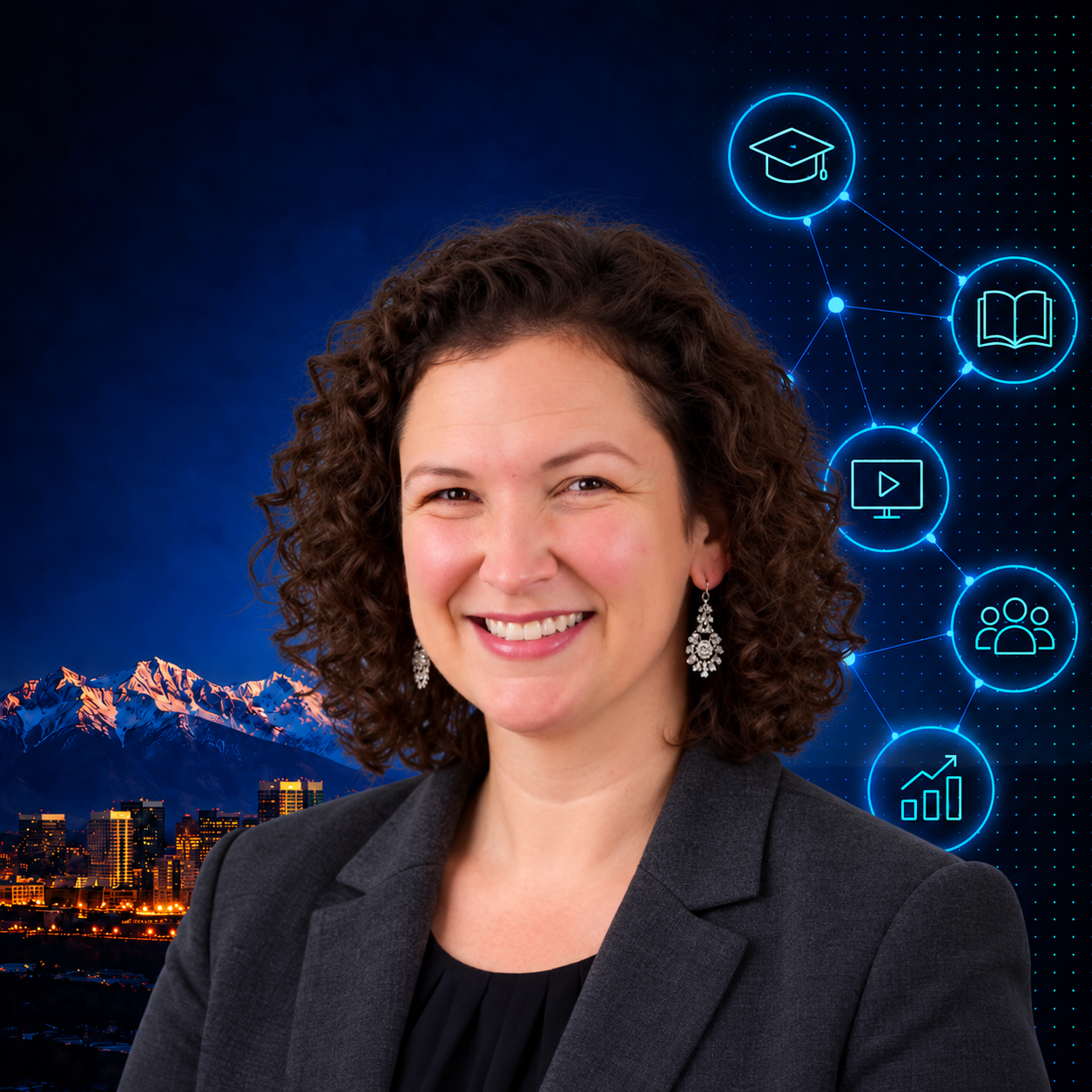
The conversation with Kathy Long, the founder of Nixit, covered the inspiration behind Nixit, the role of responsible AI in sensitive contexts, and the future of inclusive technology. It also delved into the ethical considerations in AI for neurodiverse populations, the user journey, and the lessons learned from building Nixit. Kathy shared insights on team building, architecture, and the unique support provided by AI tools for neurodiverse individuals. Additionally, she discussed the balance between personalization and privacy, as well as leadership lessons and decision-making. Takeaways Responsible AI in sensitive contexts Inclusive technology for neurodiverse individuals Chapters 00:00 Inspiration Behind NixitAI 07:30 Choosing SMS First 13:54 Team Building and Architecture 21:03 AI's Unique Support for Neurodiverse Individuals 26:06 User Journey and Personalization 35:18 Characterizing AI as a Companion 40:33 Leadership Lessons and Decision-Making
Listen now



Transcript
Monisha Saldanha (00:01) Hello and welcome to Colorado Tech People, where we talk with builders shaping the future of technology in our state and beyond. Today's episode focuses on how artificial intelligence can support neurodiverse individuals. I'm joined by Cathy Long, the founder of Nixit, an AI-powered tool designed to help neurodiverse individuals, along with their family and educators, navigate daily challenges with greater independence and competence. We'll discuss the inspiration behind the company, the role of responsible AI in sensitive contexts, and what the future of inclusive technology could look like. Let's dive in. Cathy, thank you so much for joining me today. I'm so happy to have you here. Kathy Long (00:45) excited to be here. Monisha thank you so much for inviting me to this call. This is what I love to talk about, so thank you. Monisha Saldanha (00:53) So first question diving in, what inspired you to build Nixit and what gap in neurodivergent support were you determined to address? Kathy Long (01:03) Yeah, well, I have ADHD and I have four neurodivergent children. My oldest having autism and ADHD, he was diagnosed when he was really young. And I've spent 25 years managing and navigating the resources and support environment that we have here. And it was wonderful all up until high school. And so I always like to tell people, imagine for a second, you're 18 years old, you wake up on your 18th birthday. You're walking down the hallway and next thing you know, the walls disappear, the ceiling falls out and you're left with just nothing. No house, no structure, nothing to support you. And that's, I know that sounds crazy, but that's really how it feels for those children. And I always use the statistic too, because this is so huge to me. 1.8 million neurodivergent kids fall off that cliff every year. That's 1.8 million. It is so much. And when you think of their entire life, you know, their teachers, their counselors, everybody they love and trust is gone at graduation. And so my son, you know, he graduated high school at North Glen High School, which was a wonderful Adams 12 school here. And all of those fantastic services, they disappeared. He, you know, even his pediatrician disappeared. Everything disappears. You have to start from scratch. You know, he had an individualized education program, which was a legal mandate from the state to support him. That goes away. And, you know, and it's really hard for these kids. And I think it's hard for neurotypical kids. But when you're neurodivergent, it's like all those things you set in place post-college, who knows what's going to happen. So as our family started to recognize the cratering we were experiencing, that's when I was like, you know, I'm a resourceful person. And if I'm coming up with so many problems, what's happening to everybody else? I, of course, do what I always do, which is read a lot of books. And I did a lot of researching. And I found a peer-reviewed study of, I think it's like 4,000 autistic adults. And what do they want? What would help them? And this was such an aha moment for me because what I think I kept seeing in apps and tools and resources was crisis intervention, helping Jack at the end of his rope, as opposed to helping him before he got to the end of his rope. And what the feedback was for this peer research was that they really want to be in community with others. They want that supportive infrastructure back that they had in high school. And what they also want are tools specific to autism and what they really need before they get to the end of their rope. Monisha Saldanha (03:45) Fantastic and what an interesting insight and and how do you think like do your children use the tool have they been your guinea pigs? Kathy Long (03:56) Yeah, so what's really funny is my daughter, Rheo, she works for me. She's my administrative assistant. She's 18 and she is an amazing user of the platform. My son Griffin, he uses it too. I can't get my son Riley to even visit us at home just because he's out and about post-college trying to figure out his way in the world. And then Jack, Jack has tried to use it. He's not still, he's... He's been resistant because it's our app, but he's showing it to his friends and his friends are using it. And think he's more and more getting used to using it. So that's my trick. I always tell everybody that I might be able to get everybody else in the world to use it, but the day I get Jack to use it is the day I think I won the lottery. Monisha Saldanha (04:41) He's your tough customer. Was there a defining moment when you realized AI could meaningfully support, or meaningfully improve support for neurodiverse individuals? Wait, let me say that again because I'm going to cut out that bit. Was there a defining moment when you realized AI could meaningfully support for... Kathy Long (04:43) Yeah. Monisha Saldanha (05:02) Why am I doing that? Okay one more time. This is a nice thing about podcasts is you can like edit out the bits and You didn't say it quite right Kathy Long (05:09) I think if you edit out my glass pushing, I was too nervous. Monisha Saldanha (05:18) Was there a defining moment when you realized AI could meaningfully provide support for our neurodiverse individuals? Kathy Long (05:26) Yeah, so a few years ago, or actually more than a few years ago, like four to five years ago, I started using AI. And along with a bunch of people in my cohort, they started to use it they were like, it doesn't work. I hate AI. It's just not working. Because you remember OpenAI back in the day? It didn't really work well. But I kept playing with it because, of course, I'm a curious person. So I'm like, this has got to work at some point, right? I just have to keep feeding it some more information until I figure this out. The thing about autism in particular is that you look at autism as a neurological condition. And what I started to recognize is that the problem really wasn't neurological. Like brains are not broken. Brains are just different. And so what I started to think of is like my experience with AI is not broken. It's just different. You just have to figure out how to work with it. So that's when I started to recognize that it's more infrastructural than it is actual neurological. And so me as well as many other families are coordinating with multiple apps, multiple doctors across multiple kids. And these kids need consistency. you know, especially when my son graduated high school, he graduated right, right before the pandemic. And as the pandemic started to crest, the world was burning. It was on fire. It wasn't anywhere where he felt there was any sort of firm ground to land. And so if you think about all this apps, and inputs and outputs, that's not what kids need. And the other thing is that you really can't hire one person for thousands of people at scale where AI can scale. AI can do all those things. So one of the defining moments was after a lot of testing and feedback, I started to understand that families didn't need another app. Of course, Jack told me, he said, I will never download an app. But what these families do need is infrastructure. And they need something that's going to show up every day and not burn out. And we've had wonderful feedback from testers just talking about their usage of the app and how it's been really helpful for them. Monisha Saldanha (07:30) Yeah, and that kind of follows on to my next question, is, why did you decide to build SMS first instead of an app? Kathy Long (07:38) Yeah, that was Jack telling me. So we actually built the first prototype was an app back in, what was it? Gosh, back in the day of the dinosaurs, which was last February, 2025. It just feels like forever ago. We built this app, we took six months. We had lots of feedback from users and we built this app. We were very excited about it. We launched it and all the users loved it because we never really asked the one question, which is, do you like apps? Would you download an app? So we showed it to my son and he's like, I don't want an app. I have enough apps. I'll never remember to go on another app. And that was huge and profound and probably the first question I should have asked when we were doing customer feedback. But outside of that, one of our testers was a foster mom. And even though she had ADHD, which she was part of the cohort to do that, she started to talk about how wonderful this would be for some of her foster kids to either A, stay connected, or B, that they could use this going from house to house as they needed it. And one of the things we talked about was how to make it as frictionless as possible. So add foster kids and add my son who would never touch an app. I came up with, well, what is the lowest hanging fruit if some child, if some 18 year old goes to Walmart to get a track phone for 40 bucks, what could they use? And so SMS came first. if you're able to text, you're able to download our system and be able to use the infrastructure. So it makes it frictionless. And again, this is more of an equity decision than it is a technical decision. think that investors might smirk at me thinking that we're not doing this wonderful, beautiful app. But I think that for us, it's just we wanted to remove every barrier. We wanted to be able to reach everybody we can. And we didn't want anybody to have to worry about navigating a phone through the app store or anything for bad executive functioning for a day. Monisha Saldanha (09:36) Fantastic. Can you explain a bit about downloading the infrastructure? What does that entail? Kathy Long (09:42) Well, it's really simple. You go onto the website, you put in your phone number, you put in an email address. It's not required to put in an email address and immediately Nixit texts you and away you go. It'll start with asking a few questions such as your name just so that it gets to know you. And within 30 seconds, you're able to start to have your day-to-day planning. You can ask questions about tasking and it starts to support you with wherever you're at. So depending on how you want to use it, think of it as an admin assistant, just based on SMS so that you can text directly to your companion and your companion can support you with your day. Monisha Saldanha (10:24) And do you feel like you sacrificed anything by choosing SMS first? Kathy Long (10:29) Oh, absolutely. I would be silly not to say yes, but I love apps. Who doesn't love apps, especially like I'm GenX. I live on all my apps. The sacrifice was rich UI, visual design, something really pretty, something really, something that you're used to using very iterative, app store discoverability. And I think that what we chose is we over aesthetics, Monisha Saldanha (10:38) Thank Kathy Long (10:57) We chose functionality and low cognitive load, which is one of our core tenets, is to make sure that the cognitive load is low at every time. And I think we'd make that call again every time. We've heard nothing but wonderful things from our testers and wait-listers, and everybody's really excited about the fact that it is SMS first. Monisha Saldanha (11:17) And that's an interesting point that you make about discoverability. how do people find out about Nixit What's your marketing plan? Kathy Long (11:26) Well, right now we're still in MVP stage and we've been to several neurodivergent. We had Next Steps Neurodiversity Expo. We did one in Boulder. We did one in Longmont. Our table was swarmed every time our table was swarmed. So word of mouth for sure. Once we get the user fixed and everything really working, because again, we're still in MVP stage, so we're about to add the circles, which are the family connection and sync. We're hoping to then get coaches on board and from coaches we're hoping to get institutional partners such as neurodivergent housing, workforce, institutional partners as well. And then from there we get their customers. So that's kind of how that's gonna work with marketing. So far it's very much word of mouth. People are DMing me all the time, the demand. I would say we have a bigger amount of technical debt because we can't fulfill the product that everybody wants this year so far, but we're hoping to catch up. with the desire soon. no marketing plan outside of the giant pipeline that we're already starting to build. So that's exciting. Monisha Saldanha (12:29) And what are your plans in terms of funding for the company? How do you plan on growing it? Kathy Long (12:36) Yeah, well, we have a friends and family round right now and we have an investor who is investing next week and we're hoping to get $500,000 by the end of Q2. And with that $500,000, that's going to help us with some of the core pieces of infrastructure and product roadmap that we need to complete, which before we can get into our institutional partners, we're going to require HIPAA, FERPA, COPPA. We need to not only be that safe haven for children, We have to put our infrastructure and our security and privacy policies that can surround that. We want parents to feel safe with our app. And right now, as a consumer grade app, it's not required, but we want to go over and above to make sure that we can do that. And in order to do that, we're going to need some significant funding to help us meet those ambitious conditions. Monisha Saldanha (13:27) And what's the team building Nixit at the moment? Kathy Long (13:32) What is the team building, Nixit? What is... Oh, the team. So sorry, though. Can I try over again? I was like, what is the team building? Was the team building? What is the team? Okay, so sorry. Do you want to ask that again or you just need to go? Monisha Saldanha (13:36) yeah, you're. Yeah, let me ask again. I'll just ask again. So what is the team building Nixit? Kathy Long (13:53) Yeah, so the team we have, it's a family of four, or actually five if you include my daughter, who is my administrative assistant. She's the best ever. So it's my husband who is our founding engineer. He is the jack of all trades. His background is 30 years in engineering. So he has done everything from full stack engineering to DevOps to cloud architecture, and now to AI infrastructure and orchestration. We have our chief creative officer, Justin Fern. He's incredible. He and I actually met, gosh, I want to say it was 10 years ago, we used to work together a long time ago. And a couple of years ago, he chatted with me, he DM'd me on LinkedIn and said, oh my gosh, I love what you're doing, I to be a part of it, did you know I have ADHD too? And I said, yeah, come on board, man. I mean, he is, he's a world-class disc golfer as well, so I always want to put that in there. But he's incredible with UI, UX, and he is the guru and genius around everything creative and our logo. Monisha Saldanha (14:46) Thank Kathy Long (14:53) And then we have my other friend, another coworker, Jamie Thompson, who was a CTO at FarmShare. And he and I met a couple years ago and we really connected. And he's wonderful with helping us figure out the database and the architecture and the entire SMS topology. So that's our team right now. Eventually, we are hoping soon to hire another engineer to help us with backend, as well as tickets and QA automation, which we just implemented this past weekend. And then we're hoping to, again, hire out a little more significantly in the AI engineering area. As you can imagine, we're going to need a lot of help there. Monisha Saldanha (15:31) Yeah, fantastic. And you mentioned architecture. So could you describe the consent architecture you have built and its significance? Kathy Long (15:41) Yeah, so we call the support network circles because everything is a circle. And I like to think of giving my kids a hug, which is always concentric. And the person at the center gets to decide who sees what and when full stop. And what we recognized is that the need for security and trust for them to actually use the app, need to, or I keep calling it app because that's my habit, but for them to use the platform. They have to feel very comfortable and safe using it. Parents won't be getting a transcript of their teenager's inner world and all that dialogue. Coaches, autism and ADHD coaches, they're gonna only see what the user chooses to share. And nobody gets a backdoor access into the user experience. No one overrides what that person who uses the tool wants to give to them. And I guess why does that matter? That's one of the pushes we keep hearing from different people such as investors. You know, they say, well, why can't we, if the mom is the person purchasing it, you know, why can't we give her complete access? And I said, well, as a mom with anxiety, I don't know if I want that level of access. Like, I don't know if that's healthy for me either, because now you're paying for anxiety. You're paying for more anxiety. And I think that we then get away from the child's need for autonomy and dignity and be able to have that experience where they might set up tasks that might not be the way you think they should set up tasks. So we need to have the teenagers trust that their world is their world and that their inner thoughts are their own. Because I don't want them to fear monitoring and because monitoring creates shame and shame creates performative compliance. And then I don't think anybody's solved by that. Monisha Saldanha (17:34) That makes sense. And you mentioned paying. What is your business model? Kathy Long (17:39) Yeah, right now it's more B2C, but it's eventually over the next year going to become B2B2C Right now we have individual subscriptions for $10 a month. We have family subscriptions coming for $40 for up to six users. I have six in my family with my four kids. And then from there we'll have coaches, and those coaches will have a platform fee, and then their users will be part of the subscription process. Monisha Saldanha (17:58) Thank Kathy Long (18:07) And then like I had said previously when we talked about the model, or not the model, but the platform and how it's built out, institutional partners, have neurodivergent housing communities that are looking to use this. We have neurodivergent schools. We have neurodivergent university classrooms with special needs kids who wanna use this. And so that pricing will be based on contractual rate at that $10 per user price point, but obviously with volume discounts for the, the schools and the other institutional partners with larger volume. Monisha Saldanha (18:40) Fantastic. And how are you going to measure success? Do you have a process by which you review what you shipped and understand whether it's working as expected? Kathy Long (18:51) Yeah, so back in the day, I was over CX. And the thing that a lot of leadership really looks at are KPIs, right? They want to see key performance indicators. And they want to look at the numbers, and they want to feel really comfortable that their users are touching everything in the site. Well, that's not how we do it. We measure success by do the parents and the children stop arguing as much? And it's going to be a little hard, but we're going to try some really interesting things, which is, is the user going in after the original crisis? You no, I forgot my phone at home. Are they able to get support from Access into the platform? Is it really helping them manage their day? Are they able to complete more items? And then we have the rewards, which is our Pathfinder program, which is pattern detection. Are they getting lots of feedback from the rewards and the pattern detection? And that's how we're going to know that they're really excited to use this. And then once we know that we're on the right track and that cognitive usage isn't so high that they're not having to actually type in all their wants and needs all the time and it starts to work in the rhythm of their life, we're gonna know that we're on the right track and those are the features that we're gonna ship. And so we also build, and I think this was part of your, this was kind of part of your other question, which is how do we review what we've shipped? We do use Shape Up Methodology, which I don't know if you're familiar with Shape Up Methodology, but it's a framework for product management and we really enjoy it. It's a three-week cycle with a one-week cooldown. So what we do right before the cycle, we bet on a piece of work, we ship it, and we only ask one question. Did it reduce cognitive load or did it create joy? And if we can't answer those questions in the affirmative, then we're not going to ship it. We're just going to cut it from the program even if we put time into the feature because we really, I mean, these users are our children. These users are us. So we care deeply to make sure that we're meeting that gate for every feature. Monisha Saldanha (20:54) And how will you measure how users experience the feature? How will you know if it brought joy or reduced cognitive load? Kathy Long (21:01) Yeah, so that's part of the AI. There is insight in analytics within the infrastructure because of the pattern detection of natural progression of movement. So if, for example, Jack wakes up in the morning and the SMS texts him that he has two meetings that day, he's got a doctor's appointment at three, he's got soccer practice at four, and throughout the day he's utilizing it so that we know he's checking in to say, well, when do I need to be ready for the doctor's appointment? shoot, I forgot my water bottle. Those are all touch points that we're going to be monitoring from an analytics perspective, which again, Jack can opt me into. He can decide whether or not I can see some of those analytics. And those analytics are going to be what drives us to know how many touch points the user has had. If the user is not texting the SMS, that's not a positive. We know that they're not using the app and we're going to be really concerned about that. And there's also, know, KPIs such as, you know, conversion. Churn and some of those other interrelated KPIs that you do look for. But for us, it's did Jack get seven rewards that week? Did he get three rewards the following week? Is he really progressing through the app? There's also the check-in and the check-in has what is your energy level today? What is your emotional insight today? And we use clouds and batteries. And so if... The battery and the clouds are in a low state over a period of time. We're going to also check in with that in the analytics, and it's going to be displayed that that person might need some additional support from mom and dad. So a lot of it's going to be part of the circle strategy, and a part of it's going to be the natural KPI measurements. But then a huge component is, are they using it? Are they getting things done? Are they feeling better about their day every day? Monisha Saldanha (22:51) Fantastic. And how does Nixit use AI to support neurodiverse individuals in ways that traditional tools do not? And it might be worth maybe mentioning what are the traditional ways that people, tools that people have used? Kathy Long (23:06) Yeah, a lot of, I won't name names of those different products that we look at some, one of our market competitors, but a lot of the products now, they really pray to the Holy grail of productivity. So that's the one thing that we've noticed is super polarizing in this community is that they treat them like infants. They force them into streaks. They kind of give more shame and more... intensity around some of the use of those apps. There's one app in particular that one of our testers loved. And we've had this tester for a long time. She's been a long time tester for us. She's a 30 year old woman with ADHD and she loves her app. And she was saying that one of the previous apps or the competitor that she stopped using was because she was getting really stressed out by the streaks and you could buy back the streaks, right? So if you're on a streak and you're using the app over a period of time, And I think one of the apps was something like the egg would die or the little baby would die or something, the tree would die. So it's like, if you don't take care and get into this app and do those productivity things that you really need to do, your little thing that you're growing isn't going to stay alive. It stressed her out. So she would constantly want to go into the app, but it did not help her emotionally. It was so frustrating to her. And then the app, of course, to their testament, well, you could Monisha Saldanha (24:20) Thank Kathy Long (24:30) you could give us a dollar and we'll restore your streak. Right, so there's a monetization aspect to improve and increase your dopamine so that we don't want you to feel ashamed, you're have to buy your way out of the shame. Well, that's not what we're doing. We're never gonna do that. That wouldn't be anything that we would approach. And that's one of the hallmarks of my Chief Creative Officer, Dustin. is so addicted to the idea of how do we reduce the dopamine requirement. Monisha Saldanha (24:42) Thank Kathy Long (24:58) Because again, we want people to use the platform. We want people to enjoy an experience and to feel better in their day. But we don't want this to be a dopamine-like slot machine for them either. So a lot of what we're doing is most over just meeting people where they're at at the beginning and celebrating even the banal, making sure that they feel appreciated and heard for what they can contribute and not shaming them for where they didn't meet the mark. Because that wouldn't be Monisha Saldanha (25:19) Mm-hmm. Kathy Long (25:27) who we are as a business and that's not part of our manifesto. But that's what some of the other products out there are. They require you to download an app. They require you to call a hotline, schedule an appointment six weeks from now, and that's not what we're going to do to anybody. It's sign up, 30 seconds later, you're off and running, and we hear you, we see you, and we honor you. Monisha Saldanha (25:49) Fantastic. Can you describe the user journey? You describe the beginning part. People come to the website, they put in their phone number, then they're up and running. Then what happens next? Kathy Long (26:02) Yeah, so they go and put their name in, they go and put their number in, they then go into Stripe and Stripe will connect them to a pay portal and they have up to 30 days free trial. And again, we want everybody to love it. So there's that first 30 days. We hope you love it. And then from there, they get the text from Nixit and Nixit takes them through a very short brief onboarding, which requires them to check in. What is your name? How are you feeling? Is there anything we can talk, anything you want to discuss right now or any appointments? And from there, they start to, you know, I have an appointment at two o'clock with my doctor. It'll schedule it and put it in the calendar. Or you could say, I have a task. I need to clean the kitchen. It'll start to break down the tasks into three-step process and it'll check in with the user to make sure that they feel good with where they're at with the tasking. If at any point they don't complete the tasking, that's cool too. Nobody's mad at you. You can get to it another day. Today may maybe not be your day and maybe later we can check in with you again. And then there's infrequent check-ins based on settings. you can, there is a portal you can go into and you can actually put in your settings and the settings are quite prolific. There's all sorts of settings depending on how much you want to use it and how little you want to use it. But as long as you can have access to Nixit through SMS, you can start to manage your entire schedule and all of your tasking. and it's going to remember it and it has a short context window to do those things. And it's going to over time get better and better through your experience because it's going to get to know you. Monisha Saldanha (27:37) Fantastic. What safeguards do you build into the technology to ensure it supports rather than overwhelms users? Kathy Long (27:47) Yeah, sorry, it's notes. So the master gate is every interaction has to reduce cognitive load or create joy. Like I said before, we talked about what we ship and what we don't ship. And if it doesn't solve neither, it doesn't ship. And so we're not going to do notification spam. That's the other thing we want to be careful about. People stop, at least my son will stop. Monisha Saldanha (27:52) Yeah. Kathy Long (28:12) noticing, he'll start deleting, he'll start ignoring, so we want to be careful about that. So we don't maximize the engagement by doing lots of notifications and messaging, and we don't use addiction mechanics. And the AI is also honest about being AI. It does not simulate friendship. It doesn't manufacture emotional dependency. And again, that's another gift to the SMS is because it's a short context window, so you really can't have those. long lengthy relationships unless you want to sit there and stare at an extremely long text, which it will break it apart for you if you want, but it's a really bad user experience. So we're trying to mitigate that by putting some gates and controls to keep the context window short. Monisha Saldanha (28:56) And how do you balance personalization with privacy when working with sensitive behavioral or health data? Kathy Long (29:04) Yeah, this, I'm really glad you asked this. This is one that I think a lot of people want to know because especially if you're going to present something to your children or to your family, I know how precious that is. So privacy at Nixit is an architectural decision. So it's not a policy we layered on after the fact. The system is built around short context windows by design. So the SMS is built to be brief. And we're not trying to know everything about you. The AI reads what you're doing right now, where your energy is, what's on your calendar, and it helps you with that. And that's the entirety of the scope. And it's pattern detection over time. It's not a running confessional. We also have commercial-grade security infrastructure, and we are actively roadmapping, which is why we're trying to pull in some investors for HIPAA, COPPA, FERPA, SOC 2, Type 2 compliance. This is not a wellness app, necessarily. We do not want to be mental health crisis. That would not be our strong suit. We do have some gates built in to prevent any sort of danger from happening and immediately it contacts the family. So that's one of the other gates that we have for this. This is a platform built to operate in a regulated environment. So schools, coaching practices, healthcare, adjacent settings and family settings. And here's what usually gets missed when we talk about the AI regulation conversation. The debate is always framed as how do we limit AI access to vulnerable populations? I think that's super important, but we think that's a little backwards. The right ethical framework means that AI does the cognitive lift so users don't have to heavily disclose. That's part of our gamification plan. So the short interactions, the pattern detection, did you meditate four times this week? These are gentle gates that make it harder to have long... ethically concerning disclosure conversations. The safety is in the design. Monisha Saldanha (31:00) Fantastic. I mean, it's so thought through. What feature did you avoid to protect neurodivergent users? Kathy Long (31:10) Yeah, so as a mom, I remember when the kids were little and I, not little, but when they first get their phone, you have complete access to every single conversation they ever had. And what I realized is I have four kids. That's a lot. You can't quite do that. So then you start relying more and more on tools to be able to really surveil. And when I started thinking about Jack at 16 to Jack at 25, what would have been more beneficial to me to get him to independence faster? Monisha Saldanha (31:25) Thank Kathy Long (31:39) So compliance tracking, like I don't want to do compliance tracking. I don't want to make sure that he, you I want to say you have a doctor's appointment at three o'clock, but I don't want to babysit him to make sure he gets to that appointment because he has to get to the appointment and he has to learn the penalty to not getting to the appointment on his own. If I'm constantly chasing him to get to that doctor's appointment throughout the day, well, first of all, I didn't have time to drink a cup of coffee. But secondly, he still might miss the appointment. So it's really important to make sure that the Monisha Saldanha (32:04) Thank Kathy Long (32:09) that the freedom is also part of the construct and that he has to be able to have the independence to do those things too. So compliance tracking is incredibly, it's important not to track only compliance. And so the other thing that a lot of apps do, and I think we had talked about this with other apps in the market, which is deficit reporting. It's shame, it's, wow, you didn't do that today. And that's such a horrible feeling. Nobody likes that. Shame collapses. the emotional state and it doesn't help anybody thrive. Another thing we're not going to do is parent dashboards with backdoor access. They don't get to see on the sneak what their kid is asking. Like if they say, I have Spanish but I forgot to study my Spanish test. Again, I don't think it's really important for the parents to know that. It's important for the child to start getting and developing that autonomy and that independence to. to have some consequences based on what they missed, but they can't say that they weren't aware of what was needed. Let's see, what else? I think we're just trying to reduce the, me show you how your child is failing feature set. And that's what a lot of tools in this space are focused on. So what we like to do is we track what is working, not what's broken. And the problem is not the brain, brains are not broken. We really wanna underscore that because that's not how you thrive. And the problem is the mismatch between the brain and the environment we're giving our kids. Monisha Saldanha (33:42) What's the most challenging edge case your AI had to adopt to? Kathy Long (33:51) Yeah, so the user who shows up with no context, no prior relationship, if they're depleted, if they're at the end of the rope, they type two words, that would be really difficult. We're hoping people are a little more prolific than they would be in practice. So the AI has to read tone, energy level, and communication style from a text message with no punctuation. And also Gen Z, know, Gen Z has a whole different way of speaking, like 6-7 does... Yeah, I know what that means. It has to meet them where they're actually at. So it can't just give a wellness quiz to a child. I know women my age, we would love a wellness quiz, but kids this age don't. So some of those. And then there's no structured check-in prompt. Kids aren't going to respond to it anyway. So we've got to be really careful with how we talk and communicate to children. So it has to be just, I'm here. And then what do you need right now? And so getting that right, consistently without being weird or clinical. I always think that is the hard part. That's our biggest challenge, that's, and again, I go back to that the first time I ever used ChatGPT when I first used it, I thought it was bad, it was broken. So I think that's one of the things we have to work to get over is how to engage without being annoying, without being pestering, but then how to get enough information to be able to support that person. Monisha Saldanha (35:12) you characterize the AI? Like do you see it as a coach? Kathy Long (35:18) Yeah, we look at it as a companion and we also look at it, yes, as a DIY coach, which is why it seemed like a natural and organic community to work with executive functioning coaches. So that was one of the first group of people we pulled in for testing was executive functioning coaches. And that's when they were saying, well, I need this, I need this for me. And I could use this for my practice. And what if I could distribute this to the people in my practice, the families in the practice? Monisha Saldanha (35:39) Thank Kathy Long (35:46) give an intake to the mom and an intake to the child. And that's when it started to really cement for me what this really is. It's a DIY coaching application. And then we'll eventually have the coaching CRM tool, which will pull them all together. So you could have a serviceable coaching tool, but then you can also use the AI as your own personal coach. Monisha Saldanha (36:11) Yeah, fantastic. What ethical considerations are unique to building AI for neurodiverse populations, and how do you address them? Kathy Long (36:21) Yeah, you know, I'm going to mention something that a friend of mine, so I have a founder who also is working in the AI for Good space and his product is doing really good things in the community. And we were talking about the extraction that's happening and the data mining that's happening. And it's really scary that that's what's going on with our kids these days and especially how sensitive health information is. A lot of people have different feelings about autism or ADHD in this political climate. And I think that's one of the biggest concerns for us is that how we build is very important. So I think there's three things that a lot of AI builders get wrong. Is that first, neurodivergent users, they're not a data set. Vulnerability with AI is not raw material to be mined or used to trigger interventions without consent. That's again why we keep everything really small. We don't want to extract more than we have to, to help that person get through their day. Second, neurodivergent experience is fluid. You might have autism and ADHD, you might have OCD, you might have dyslexia, dyscalculia. You might have a variety of different sorts of neurodivergence that don't always look alike from day to day. Like last week I would say my ADHD, I was fine. This week... a little tricky, it was tricky getting through my day. And we realize how fluid it is. So we don't wanna lock anyone into a static profile based on a diagnosis that harms them. And then third, psychological privacy. When you're building for people whose inner experience has been chronically misunderstood by everybody, even in the news, and pathologize, I feel like we have a higher obligation to get that consent architecture right, just not as a... checkbox. It's got to be the foundation for every decision. Monisha Saldanha (38:18) And looking back, what do wish you'd known before starting the company, and what would you do differently if you were building it from day one today? Kathy Long (38:29) Foundation before features. think every founder is so darn excited to get those features out. But what we ended up doing is we ended up taking a step back. I think it's really sexy right now to say, I could vibe code an app in 30 days and start selling it. That's sexy. But the one thing that I think, and I might cry, so I try not to cry. get teary-eyed when I think of my child. When I think of Jack and I think of how much I want to honor him and how much dignity I want him to feel in his very existence every day. We set the better foundation. We took a step back. We didn't tack on a strike payment portal immediately. We wanted to make sure that the AI was working correctly. We wanted to make sure that there is a crisis detection built into the app. If somebody is threats of self-harm or any sort of mental health. Immediately it's call 988. If you're feeling anything, it's like this, we have this long script that goes off immediately. We want to get those foundational things right because we're talking about my children. We're talking about my precious babies, which everybody has precious children, and we want to make sure that the foundation is set and it's not about how much money we're going to make in the future. And I know that probably it's a Silicon Valley bad thing to say, but I think foundation, infrastructure work. It's slow, it's unglamorous, schema designs, QA pipelines, security architecture. But that work is the reason we can now ship with confidence in three-week cycles. We have a QA pipeline, it runs under 10 minutes, so we know we're constantly testing and regression testing the AI, and we have all these sub-agents that we've built to do the entire orchestration to continue to test the system. So for us, boarding infrastructure is liberation. I know we're geeks that way. And I know that now, and it's just, I really feel confident that that's the best approach that we could make. And that's what I would have told myself two years ago. Monisha Saldanha (40:33) And what's the mistake you made early in building Nixit that taught you an important lesson? And how did it change the way you lead or make decisions today? Kathy Long (40:45) I'll be honest. I would say it's, I'm sometimes too slow on team decisions. I'm a nurturing leader. I tend to want to put my hug around everybody, you know, just hug everybody. And I think that we really want to create, we are crafting a company that's neurodivergent. So it's not only the people that we're building for neurodivergent, but the people who work for it are neurodivergent. We have my husband's hearing impaired and neurodivergent. I'm neurodivergent, Justin's neurodivergent, Jamie's neurodivergent. My daughter's neurodivergent. So it's building it with people who are neurodivergent. I do want to put my arms around them and kind of treat them like my child sometimes. And I think that, you know, I believe in people and sometimes longer than the evidence supports. I want them to succeed. And what I learned is being kind to one person in a way that creates sustained drag on your mission is not kind to anyone. So make the call faster, be direct, be respectful. and move forward. I think, is it Brene Brown? She always says, clear is kind. And I think that's what I live by. I think that's really important. Monisha Saldanha (41:54) So are you saying there were people that you had on the team that you had to let go? Kathy Long (41:59) Yeah, there were a couple people on the team that were early on, they, you know, it just wasn't a good fit. And it was, it had nothing to do with their skills necessarily. It's just, again, it's, it's letting it linger too long and it just slows down everything. It's waiting for them to finish something. And, know, and especially when somebody's neurodivergent, I know I experience a time blindness. I experience, you know, I I have times where it's like look squirrel. And it's like you can have those people and I want to always accommodate for everybody's disability and I want to be as inclusive as possible. again, if it's not working and you're not aligned, it ends up hurting everybody in the team. So it's like for us to survive as a team and for us to thrive as a team, making those calls earlier instead of waiting because you just think if you love them enough, you'll get to the next part of it. love is not enough sometimes. And that's okay. That's what I learned. Monisha Saldanha (42:57) Yeah, that's good advice. Is there anything about the user behavior that has surprised you in the usage of the platform? Kathy Long (43:09) Huh. Now... Yes, actually, yes. I had to really think of one. There was, in the beginning, what Kathy wanted was different than what some of our users wanted. So my flavor of Nerdivergence would love for it to look a certain way. So one of the things I thought would be super, super cool is I have medication and vitamins. And what I find in my kids have medications and vitamins. just always wanting to track their medications and vitamins and when do we have to renew the prescription, when do I have to go to the doctor and all those wonderful things. That was actually one of the first things I wanted to work on and focus as a feature. And after all sorts of feedback, nobody else wanted it. So that was really funny. like, well, I guess I just need to go buy an app that helps me keep better track of everybody's medication because... Monisha Saldanha (44:04) Thank Kathy Long (44:04) I feel like that's my full-time job sometimes is making sure everybody gets to the doctors at the right time and that the insurance and the prescription cards and the different pharmacy, but that was one that nobody else wanted but me. Monisha Saldanha (44:20) And when you think about books that you like to read, is there one book that every builder should read and why? Kathy Long (44:30) Um, I am a prolific reader. And so I would say there's a couple of things that helped me, but they might not help everybody. But any, I would, I would highly recommend for any first time builder or first time, first time founder, even a non-technical founder, especially if you have a very small team, the book Shape Up by Ryan Singer, it's, we use shape up methodology for product management and the software development life cycle. We use linear. it's made such a difference. Our velocity is, I have actually never seen so many tickets get completed on a cycle basis as I have since implementing Shape Up. And I've been doing software for, gosh, 30 years. And maybe my husband and Jamie are just the fastest guys in the universe. But I would say like Shape Up, really changed how I looked at architecture and deployment cycles. You start with the planning. And what I really love about ShapeUp is it's such a convergence of business meets product. It sets proper expectations and alignment. You get those features done in a three to six week cycle. We choose three because we're a small startup. So those features get completed in a three week cycle. Then you have the cooldown where we do all the extra work, the tickets. We just finished completing the QA swarm. So we did that during cooldown, which is great because now it's setting us up for the next cycle. And I would say it's been a game changer for us. So I highly recommend it. Can't recommend it enough. It's also free. You can go, I think it's on the internet. There's an EPUB book for free. It's Shape Up by Ryan Singer. Go get it. Monisha Saldanha (46:11) Fantastic. Thank you for the recommendation. This has been a wonderful conversation, Cathy. Really learned a lot from you. Really excited to hear how everything develops. Wish you all the luck in closing this round of funding. We learned a lot about the role of responsible AI in sensitive contexts. We discovered the inspiration behind your company. We talked about the future of inclusive technology. So really fascinating discussion. Thank you. much and all the best to you as you build your company. Kathy Long (46:46) Well, thank you so much for having me. This was super fun.
More Episodes
Keep listening
Building Tech for the Moments Between Therapy Sessions
Mathias Gran shares how his family’s experience navigating his daughter’s mental health crisis led him to create SuperProud, an app that helps parents reinforce positive behaviors and support children through challenging growth moments. The conversation explores children’s mental health, positive reinforcement, product-market fit, and the realities of building a mission-driven startup while balancing a career and family.
Building Technology to Fix How We Find the Right Healthcare
Tenay Benes, founder of The Care We Need, explains how her own complex-illness journey led her to build a platform that helps people navigate fragmented healthcare, wellness, and human services and connect with the right care professionals more efficiently. The conversation explores patient-centered care navigation, AI as a support tool rather than a replacement for human judgment, and Tenay’s ambitious long-term vision for making complex care more coordinated and accessible.
From 'Can We Build it' to 'Should We'?
Arterial founder Kyle Wandishin shares what he has learned building a startup at a young age, from overcoming concerns about credibility to using customer insight, mentors, and community to shape the product. The conversation also explores how AI is increasing the leverage of small teams and why the most important founder question is increasingly shifting from “Can we build it?” to “Should we build it?”